Last updated November 21, 2026
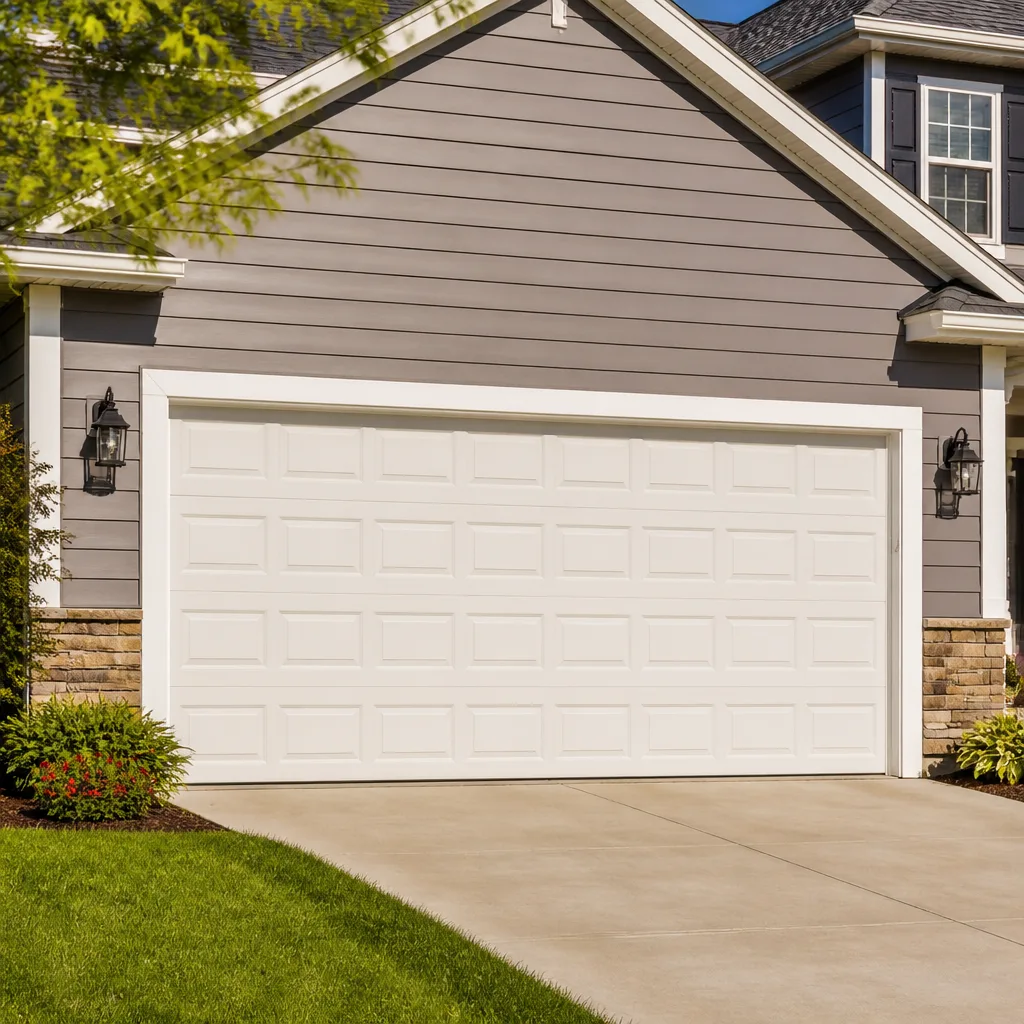 Raised-panel steel
 Carriage house
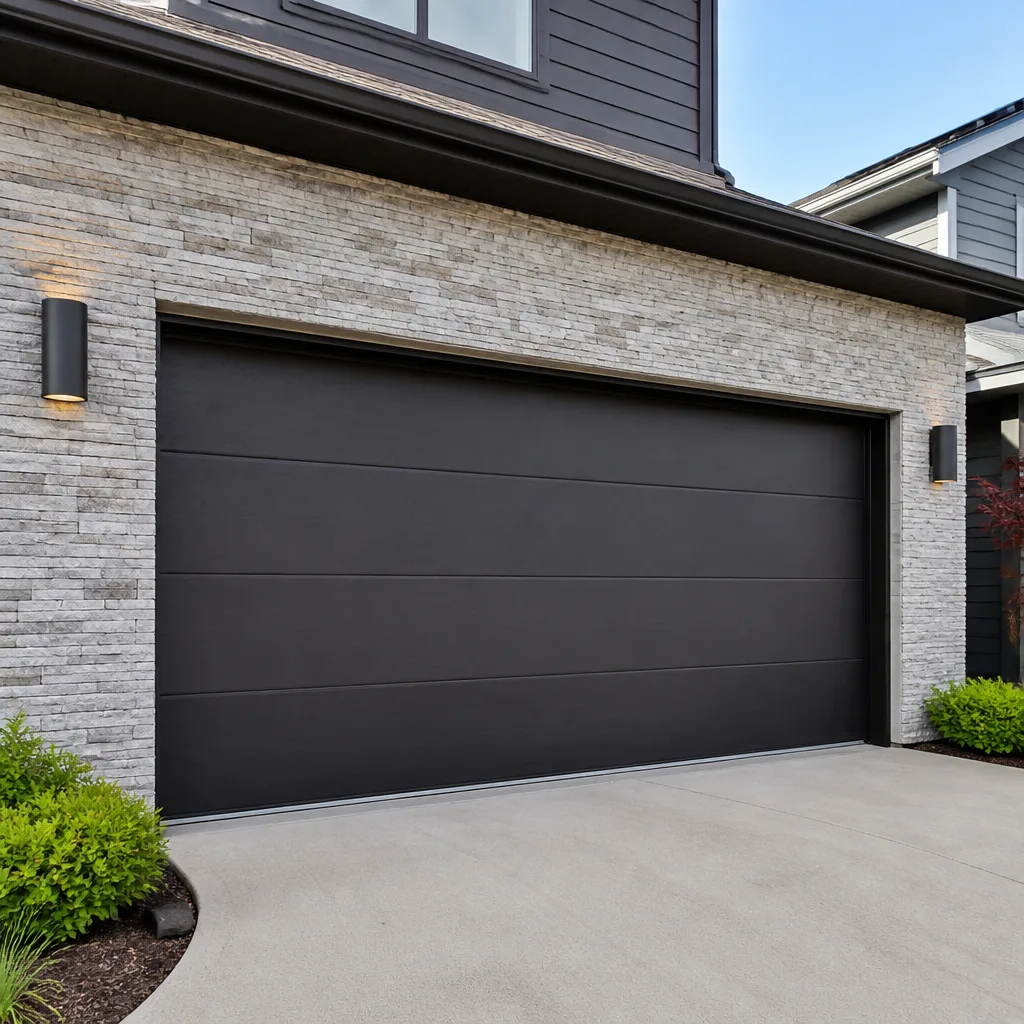 Modern flush
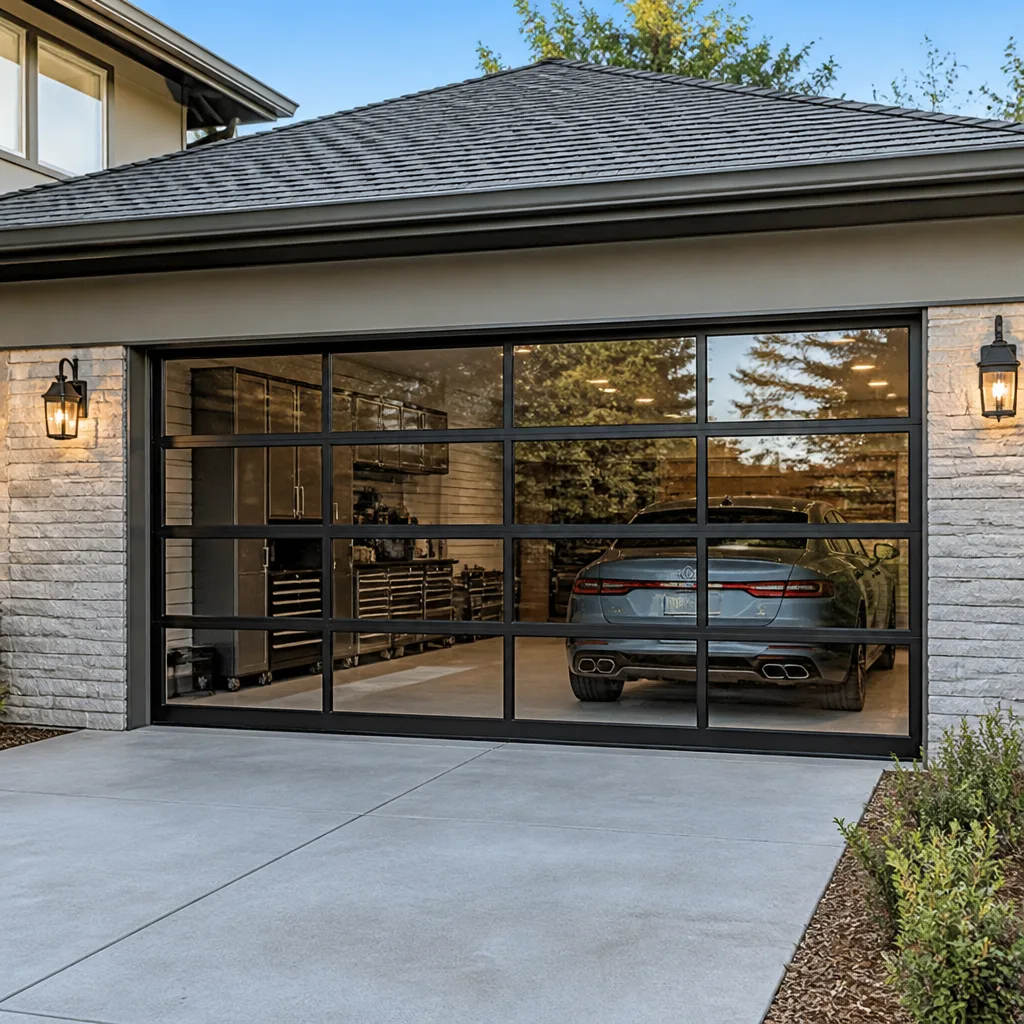 Full-view glass
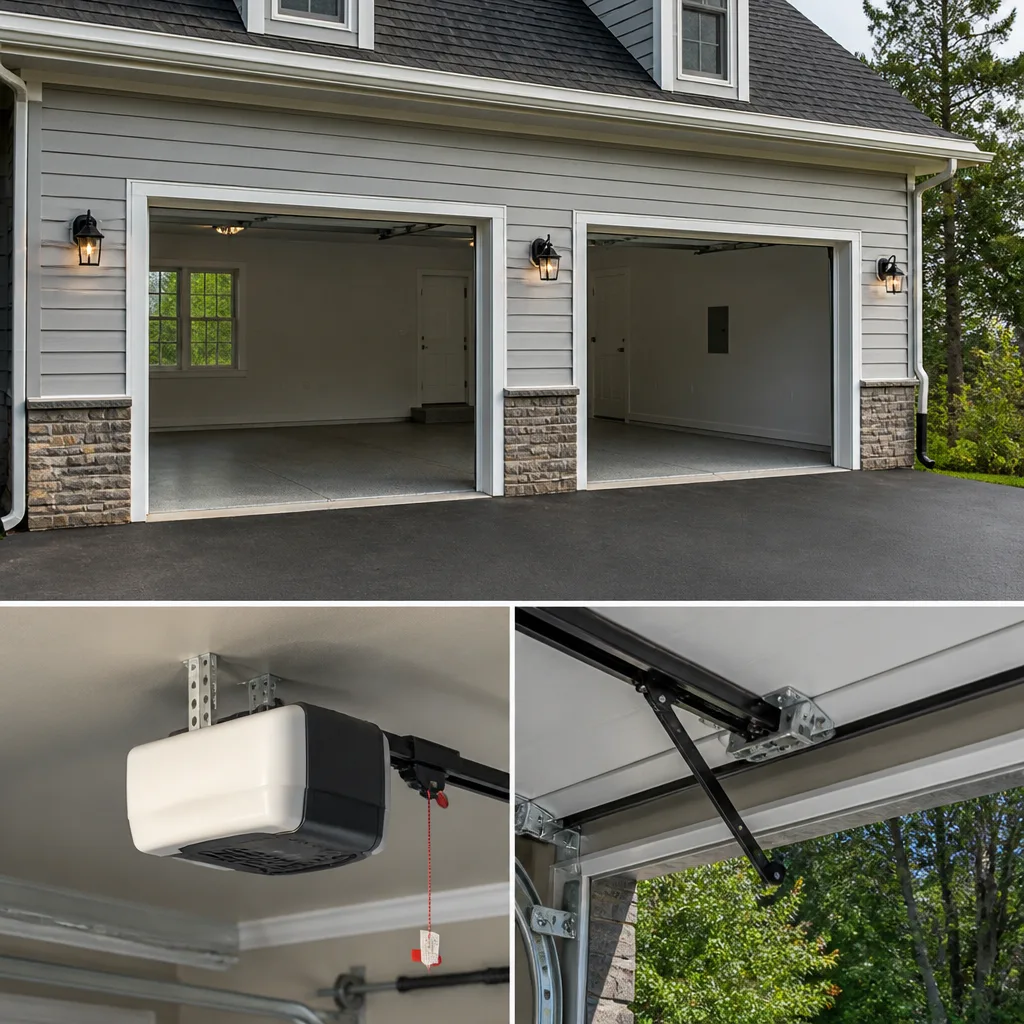 LiftMaster openers
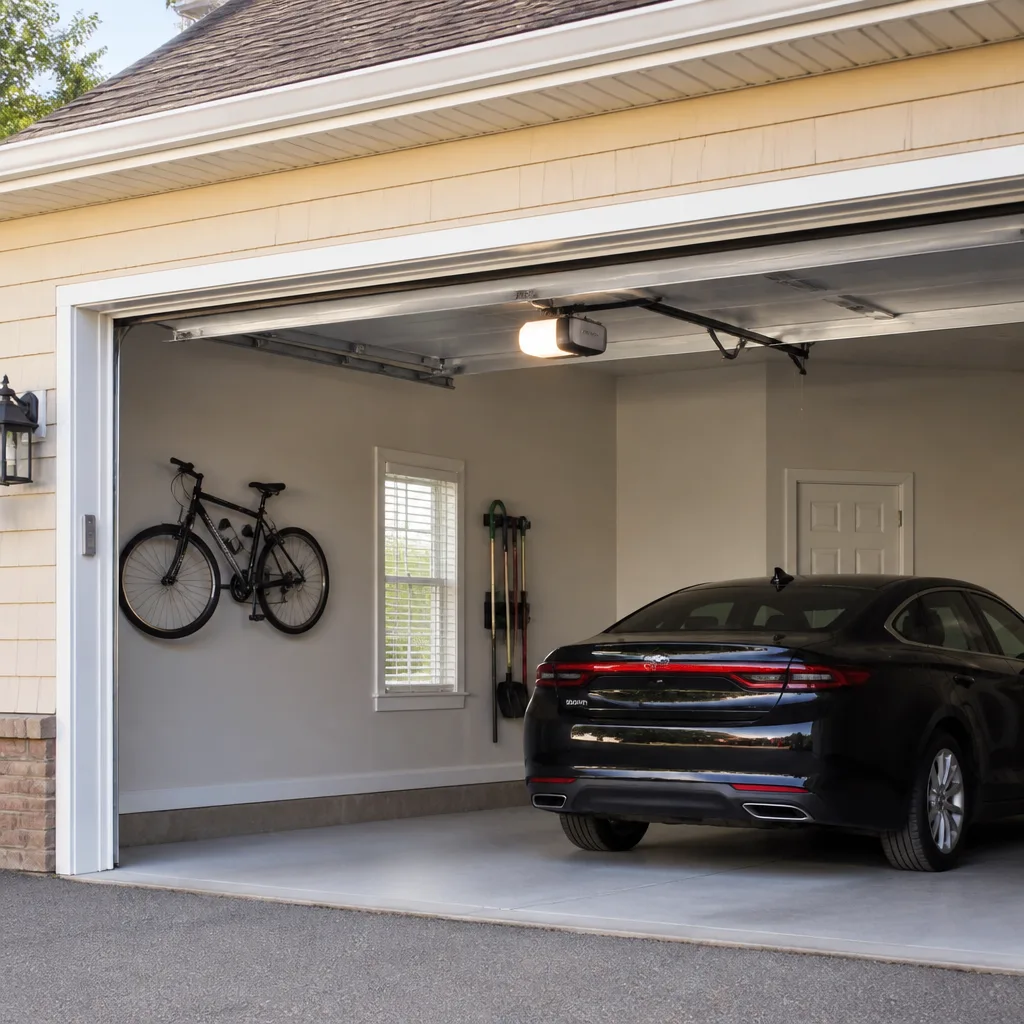 Chamberlain openers
Full 25-point door and opener safety check with every visit - springs, cables, rollers, tracks, and your LiftMaster or Chamberlain opener included
You get a price before we start. It does not change when the pro arrives.
Get your free estimateGarage Door Warning Signs: A Davie Homeowner’s Reference Guide
Most garage door guides wait for the obvious failure: the door won’t move, the spring snapped, the opener grinds to a halt. By then the repair is already the expensive kind. In our experience, the parts that break on a Davie door almost never fail without weeks of quiet complaint first. Oxidation leaves a story on a spring. Rollers announce bearing wear with a sound you can learn. Tracks shift a fraction of an inch and stay that way until a storm pushes them further. This guide walks through those early indicators component by component, so you can name exactly what’s degrading, estimate how much time you have, and decide whether to schedule a repair this week or call it in right now.
Quick Answer
Garage door warning signs in Davie usually start with small changes: a door that sits unevenly, a squeal that appears at the same point in every cycle, a spring with visible rust pitting, or a safety sensor that needs re-aiming every few weeks. Catch these early and you’re booking a scheduled repair; ignore two or more at once and the next failure usually arrives as an emergency, often with collateral damage to cables and tracks. Stopping the door for anything involving a snapped spring, a frayed cable, or a door that travels unevenly under load is not optional.
Styles & brands we work with
- Raised-panel steel
- Carriage house
- Modern flush
- Full-view glass
- LiftMaster openers
- Chamberlain openers
Table of Contents
- Warning Signs in the Springs
- Warning Signs in the Cables
- Warning Signs in the Rollers and Hinges
- Warning Signs in the Tracks
- Warning Signs in the Opener Motor
- Warning Signs in the Safety Sensors
- Two Tests Any Homeowner Can Run
- Stop-Use Signs vs. Scheduled-Repair Signs
- How Davie’s Humidity and Heat Change the Timeline
- What Ignoring Early Signs Costs You
Warning Signs in the Springs
Torsion springs sit above the door on a shaft, and extension springs run along the sides. Both do the heavy lifting; the opener only guides the door. A torsion spring in Davie’s humidity doesn’t snap without warning. It shows rust pitting, uneven tension, and balance drift for weeks before it goes.
Here’s what to watch for:
- Rust pitting on the coils. Florida’s humidity works into the steel over time. Surface rust is normal; pitting – small crater-like spots where the metal has thinned – is where a spring tends to break. Run a gloved hand along the coil and look for rough spots.
- Uneven tension. With the door halfway up, one spring should look coiled the same as its partner. If one is visibly looser or the gap in the coils differs, the pair is out of balance.
- Drift at the halfway point. Lift the door by hand to waist height and let go. A healthy door holds. A door that slides up or creeps down has a spring that’s losing strength.
- A spring gap you can see. A visible separation in the coil is a spring that has already let go. On a two-spring setup, the door may still run on one spring – and that’s when a single call becomes a pair replacement plus cable and track damage.
Springs are under real tension and are not a part a homeowner should touch. We handle the repair because the failure mode is severe enough to require it.
Warning Signs in the Cables
Cables are the safety line. They hold the door if a spring fails, and they transfer lift force from the drum to the bottom bracket. When they start to go, the signs are usually audible before they’re visible.
Listen and look for:
- Frayed strands near the drum or bottom corners. A cable that has begun to separate looks like a rope with a fuzzy edge. Any fray is a stop-use sign, not a “keep an eye on it” sign.
- A door that lifts crooked or leans to one side. Cables slacken in pairs; one side loosening usually pulls the other out of tension too.
- Snapping or popping noises during travel. Cable that slips off the drum makes a hard metallic snap at the same point each cycle.
- Slack on one side with tension on the other. If you can push a cable and feel it give, that side has lost its hold.
Cables are one of the parts we check on every call, because a cable that snaps on a running door can whip and cause injury. We never suggest tightening or re-routing one as a homeowner task.
Warning Signs in the Rollers and Hinges
Rollers are small and cheap. They are also the first component that will tell you the door needs attention, if you’re paying attention. The signs are mostly sound and stability.
- A squeal or grind that repeats at the same point. That’s usually a flat spot or a dry bearing, not a lubrication problem you can solve with a can of spray.
- Vibration you can feel through the floor. A door running smoothly transfers almost none of its motion into the structure.
- Visible cracks in a nylon roller or a wobble when you nudge it. Rollers should spin freely with no lateral play.
- Hinges that look loose or show rust bleed at the rivet. Loose hinges let the door shift in the track, which stresses everything above them.
South Florida’s humidity means metal-on-metal contact between rollers and tracks oxidizes faster than it would in a dry climate. We see rollers that look fine but have lost their smooth spin, which is the stage right before a roller seizes mid-travel and the opener has to fight the door. When you’re ready to trade a symptom list for a real assessment, that’s what garage door repair is for: a technician diagnoses which rollers, hinges, or drums have reached the point of replacement rather than guessing from the driveway.
Warning Signs in the Tracks
Tracks are the frame the door runs in, and they’re the part Davie homeowners most often overlook because they don’t look like moving parts. They are. And a track out of true turns a small repair into a full door job.
- A visible gap between the door and the track on one side. Run a hand along the edge of the closed door; feel for a consistent gap on both sides.
- Dents or kinks from a bumped corner. A mounting point that has bent lets the door ride out of line.
- Rattling or thumping over one section of travel. That’s a door contacting the track and being pushed back, which means the track is slightly bent.
- Loose mounting bolts at the ceiling or the floor. Storm vibration and the settling of the structure loosen them over time, and a track is only as straight as its mounts.
Our advice is simple: don’t bend a track back into shape yourself. A track that’s within a millimeter of true after a repair tends to fail again, and you’ve used up the time you had to fix it properly.
Warning Signs in the Opener Motor
The opener is where a mechanical problem upstream shows up as an electrical one. A motor that’s straining isn’t the problem; it’s the messenger. When we run diagnostics, we check the door’s balance and the springs before we ever open the motor housing.
Watch for:
- Reverse-after-contact behavior. The door meets a small obstruction and backs up. That’s usually the safety system working as designed, but if it happens with no obstruction, something is binding.
- A motor that heats up or cuts out after one or two cycles. On a LiftMaster or Chamberlain unit, an overheat trip is often the opener telling you it’s fighting a heavier door than it should.
- Grinding, clicking, or a whine that wasn’t there before. The gear and sprocket in the unit don’t wear from nothing; they wear under load.
- The door stops tracking its full travel. If the opener loses its limit position repeatedly, the door or the drive system is the likely cause, not the remote.
- An old unit with no reversing function. Safety reversing is a baseline feature on modern openers, and one of the reasons an upgrade makes sense.
Opener repair and opener replacement are different jobs. We service both, and we’re familiar with the smart-home platforms (LiftMaster’s myQ and Chamberlain’s app-connected units in particular) that most Davie homes either have or are moving toward. That expertise also matters when a system is already connected: a Wi-Fi opener that stops responding is usually a diagnostic issue, not a reason to replace the unit.
Warning Signs in the Safety Sensors
The two small lenses at the base of the track are the door’s tripwire. When one is knocked, dirty, or fooled, the door reverses or refuses to close. None of that is dangerous on its own, but it’s a sign you can’t ignore, because a sensor that fails has a way of failing unseen.
- A rapid blink on one sensor. Solid lights mean alignment; a blinking light means misalignment or an obstruction.
- The door closes only if you hold the wall button. That behavior means the safety circuit is compromised.
- Dust or film on the lens after a garage project. Florida garages hold sand and pollen; a dusty lens is a common, easy-to-miss cause of a failure to close.
- A sensor that gets bumped out of position by a car or a recycling bin. The mounts loosen; the beam drifts; the door stops.
- A door that reverses on a sunny day with nothing in the way. Reflected light can fool a sensor that’s out of adjustment.
Test the sensors once a month: close the door and pass a broom handle through the beam. The door should reverse on contact. If it doesn’t, stop using the door until it’s fixed. We check sensors on every service call because they’re the cheapest fix on the list and the one that gets skipped.
Two Tests Any Homeowner Can Run
These two checks take about five minutes and tell you more than any visual inspection. Do them while the door is closed and the opener is disengaged.
- The balance test. Pull the release cord to disconnect the opener. Lift the door by hand to about halfway and let go. It should stay put. If it climbs or drops on its own, the spring tension is wrong, and the door will work the opener harder until something gives.
- The speed test. Re-engage the opener and open the door. A healthy door lifts smoothly and at a consistent pace over its full travel. Watch for a lurch at the first section, a slowdown near the top, or a shudder as it goes up. Any of those says the door is binding or the opener is overloaded.
Add a monthly sensor test to your routine and you’ve covered most of what a technician checks on a routine visit. If a test result worries you, that’s the moment to plan a repair before the door forces the issue.
Our technicians have up to 15 years of experience diagnosing exactly this kind of problem. When you’d rather have a trained eye confirm what your own test found, that’s the point to book garage door opener repair or an inspection. We give free estimates, quote and agree on the price before any work starts, and can often make it the same day when a door has to be fixed now.
Stop-Use Signs vs. Scheduled-Repair Signs
Most warning sign lists make everything sound like an emergency. That’s not helpful and it’s not true. In our experience, there are two tiers, and knowing which one you’re in is the whole point of catching signs early.
Stop using the door and call now if you see:
- A snapped spring, or a gap in a coil
- Any frayed, slack, or loose cable
- A door that lifts crooked, binds hard, or hangs in place when the opener tries
- A track that’s visibly bent or has come away from its mount
- A door that falls, or reverses without obstruction
- An opener that cycles on its own or trips its breaker
Plan a scheduled repair if you see:
- Rust pitting on a spring that’s otherwise holding tension
- One or two squealing rollers
- A rattle over one section of the track
- A sensor that needs occasional adjustment
- A door that gets a bit slower or louder over the course of a season
The first list is where a broken part can injure someone or bring the door down. The second list is where a trained technician can order the right part and fix it before it joins the first list. Either way, give us a call and we’ll tell you which category your door is in over the phone.
How Davie’s Humidity and Heat Change the Timeline
National warning-sign guides are written for a four-season climate. A garage door in Davie lives in a different environment: warm and humid most of the year, with sudden storm vibration and a lot of wet-season rain. The result is warning signs that show up in a different order, and often faster.
- Rust appears on the coil, not just the paint. Humidity reaches into a torsion spring and starts pitting long before the visible paint film breaks. Pitted steel is the start of a fracture.
- Lubricated parts lose their film sooner. Heat and moisture thin grease. A roller that was quiet after its last service can dry out and start squealing in a season.
- Storm vibration works fasteners loose. A summer of heavy rain and wind isn’t just an inconvenience; the vibration it sends through a garage can work track mounts and hinges out of true over time. Check for a rattle after a big storm.
- Seasonal cycles of heat and rain speed up the small stuff. A sensor lens that’s fogged or spotted will be more likely to misbehave here than in a dry climate.
What does this mean in practice? A door in Weston or Cooper City faces the same pattern, and the difference between a Davie spring repair and a Davie emergency call is often whether the homeowner caught the first visible pitting in time. Start your own check with a rust inspection in the wet season.
What Ignoring Early Signs Costs You
We can’t promise every door a specific dollar figure; every repair is quoted before work starts, and the range depends on the door, the spring type, and the part in question. What we can tell you is the pattern. A door that shows two or more early warning signs and is left alone for another six months tends to move up the risk ladder: a worn spring grows more likely to break, a seizing roller can take a track with it, and a binding door can shorten the life of the opener beside it. The result is a quote that covers more than one component, not just the one that started showing symptoms.
Handled early, you’re looking at a single-component repair. Handled late, you’re looking at the original part plus cable damage, track adjustment, and sometimes a new opener. That’s why we treat a symptom list as a scheduling tool, not a shopping list. Call us when you spot two signs and we’ll tell you what we see and what it’ll cost, in writing, before anyone touches the door.
Common Mistakes to Avoid
- Lubricating a spring to hide a noise. A fresh film of oil can quiet a coil for a week while the pitting underneath gets worse. The noise is information; fix the cause, not the sound.
- Bending a track back into place. A track that looks straight after a DIY fix is rarely straight enough to keep the door from riding out of line. You’ve spent your repair window on a repair that won’t last.
- Replacing a spring without checking the cable. Springs and cables wear together. A new spring on an old cable usually means a second call before the end of the season.
- Trusting a sensor that only needs “a nudge.” A sensor that drifts every week has a mount problem. Adjusting it every week hides the cause.
- Replacing the opener to fix a stiff door. A heavier-feeling door is usually a balance issue. We’d rather correct the door’s balance than sell you a new motor that will just work harder.
- Ignoring a new rattle after a storm. Storm vibration loosens mounts and hinges. What looks like a harmless rattle is the first sign of a track drifting out of true.
- Waiting for a “big enough” symptom. The cheapest garage door repair is the one scheduled from a sign list, not the one called in when the door is stuck.
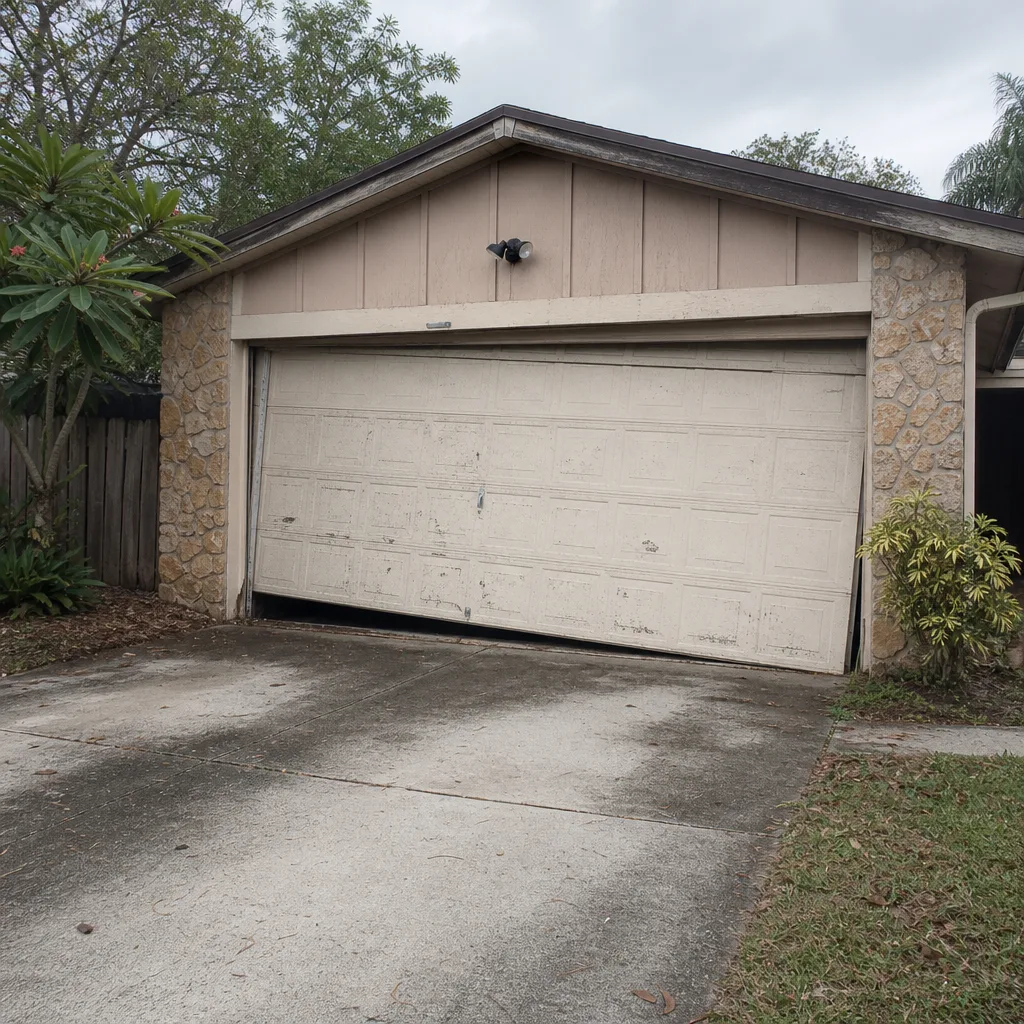
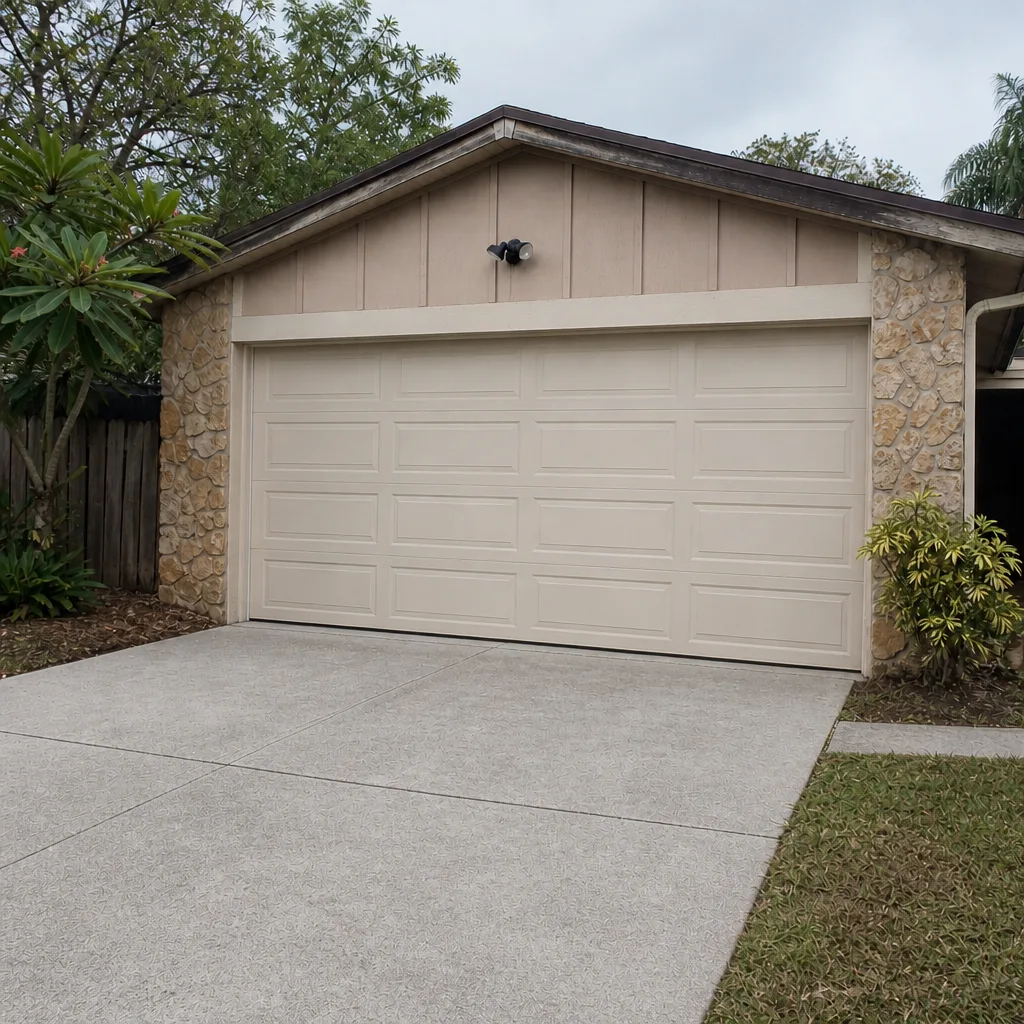
See the difference
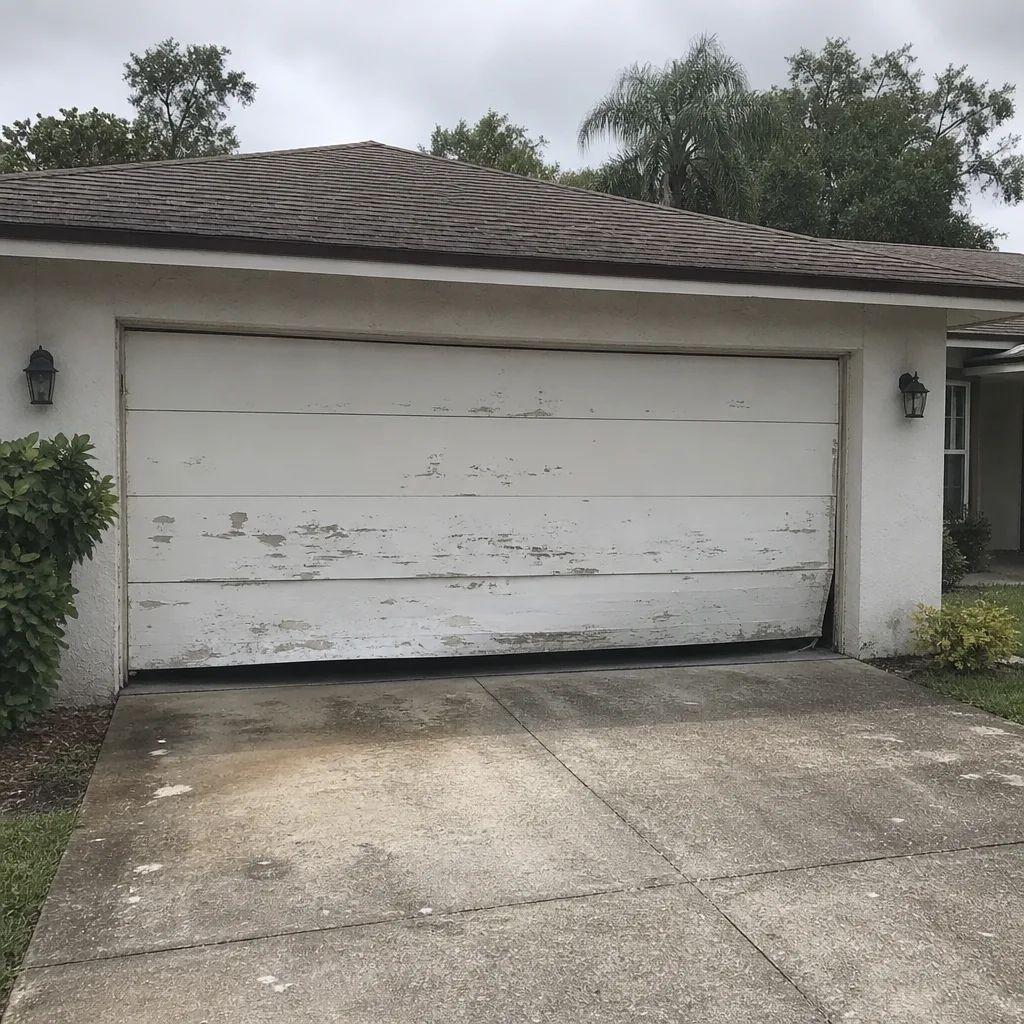 Before
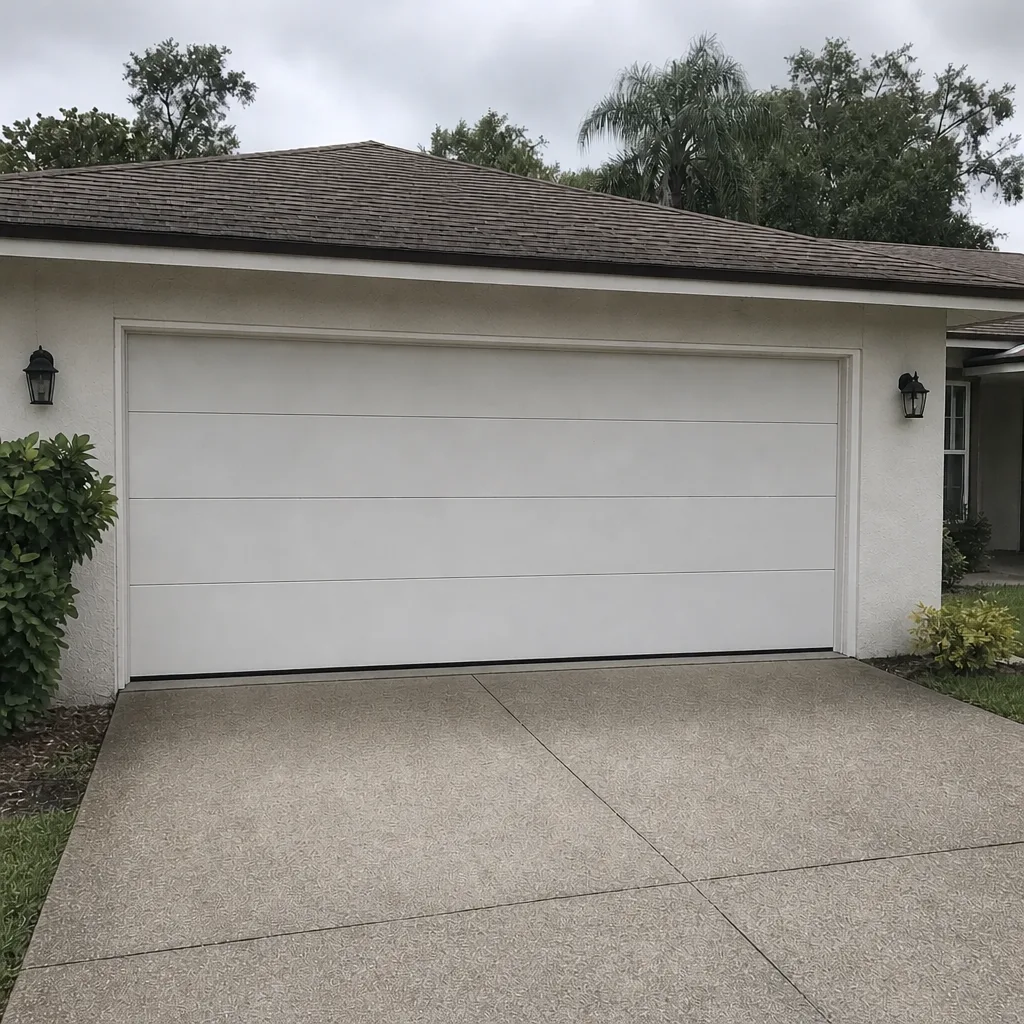 After
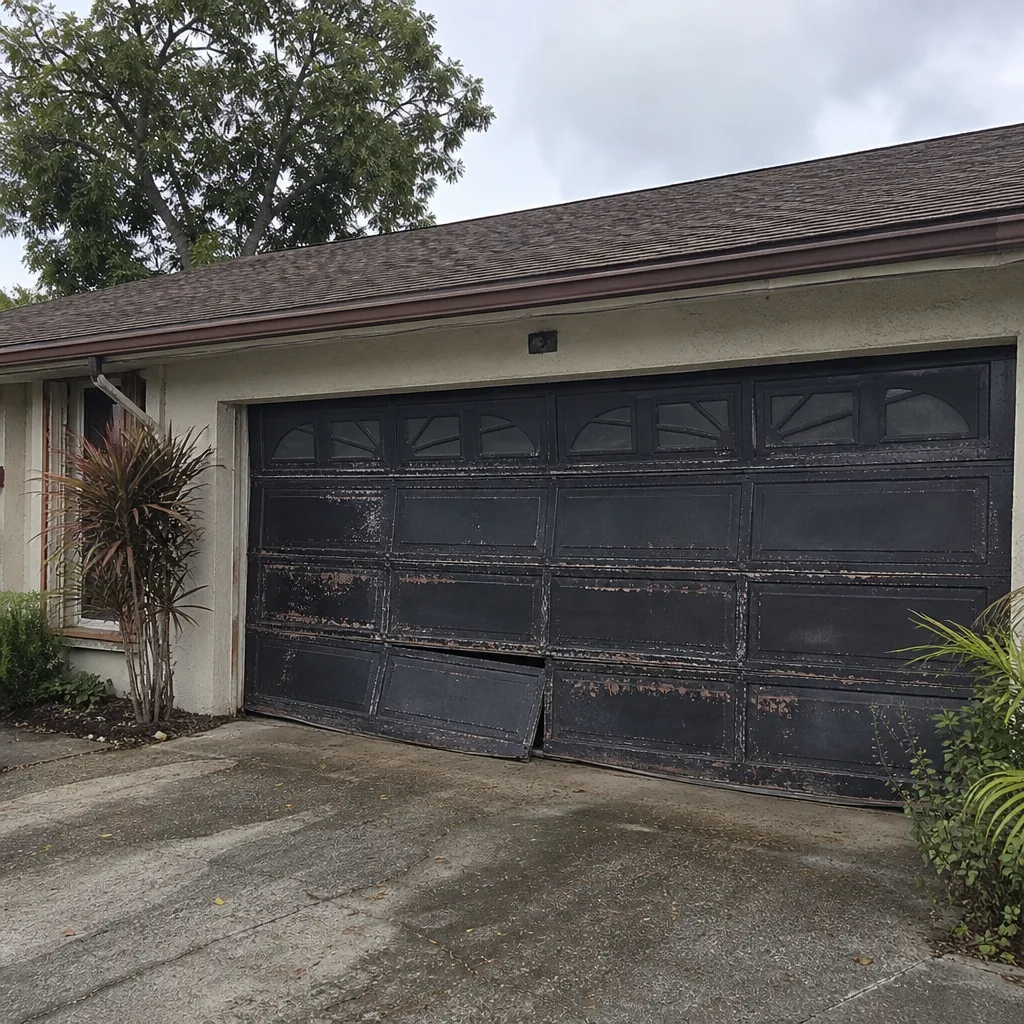 Before
 After
 Before
 After
When to Call a Professional
Call us when the door isn’t just telling on a part but isn’t acting like a door: it hangs, jerks, reverses for no reason, or won’t close at all. Call for any visible spring or cable issue, and for any door that feels heavier than it should. Call if your safety test fails, or if your opener is a Raynor, LiftMaster, Chamberlain, or Genie unit that has started behaving unpredictably. And call if you’ve spotted two or more of the early warning signs in this guide; that’s the point where a scheduled repair saves you the emergency. Davie Garage Door Repair Co offers free estimates in Davie, same-day service, and a fast response from 7am to 7pm. Call (866) 406-5925 and we’ll tell you what’s going on.
Frequently Asked Questions
The most common early signs we see are rust pitting on the springs, one or two rollers or hinges that squeal at the same point in every cycle, a door that vibrates or rattles over one section of the track, and a safety sensor that needs adjustment more often than it should. A door that drifts from its halfway position during the balance test is the clearest mechanical warning sign. Call (866) 406-5925 for an exact quote if you’re seeing more than one – estimates are free.
A spring that’s about to break usually shows rust pitting on the coil, uneven tension between a matched pair, and a door that won’t hold its position in the balance test. A visible gap in the coil means it’s already let go. Springs are under high tension, so don’t try to inspect one by grasping or measuring it; a trained technician checks that. Call (866) 406-5925 for a free estimate and we’ll confirm the spring’s condition.
Yes, in most cases. Same-day service is available for repair calls, including emergency jobs where the door won’t move or won’t close. We operate with fast dispatch from 7am to 7pm. Call (866) 406-5925 to book and we’ll tell you what’s available.
No. The price is quoted and agreed before any work starts, and the written estimate sets the final price. If we find something that wasn’t visible until we got into the job, we tell you before we continue, not after. Call (866) 406-5925 for a free estimate and an upfront price.
The local professional we connect you with is licensed and insured as their state requires. We work across LiftMaster, Chamberlain, Genie, and Raynor systems, so the person diagnosing your door is familiar with the brand already installed. Call (866) 406-5925 to schedule.
Once a month is the right rhythm here. Run the balance test, test the safety sensors with a broom handle, and look at the spring coil for new rust. In Davie, the wet season is when humidity and storm vibration make conditions hardest on a door, so that’s the stretch to inspect most often. Call (866) 406-5925 if a monthly check turns up anything you’re unsure about.
The Bottom Line
Garage doors don’t fail without telling you. In Davie, the signs start small and weather-dependent: a little rust on the spring, a repeat squeal, a rattle after a storm. The two tests in this guide – balance and speed – will tell you more than a visual inspection, and the difference between the two risk lists is the difference between a scheduled repair and an emergency call. If you see one sign, watch it. If you see two, schedule the repair. And if the door stops behaving like a door, don’t run it.
When you’re ready to turn a symptom into a diagnosis, garage door repair starts with a free estimate, an upfront price, and a same-day service window when you need it. If your door is ready for a new opener, garage door opener repair covers smart and connected systems from top brands. If the door itself is closer to replacement than repair, garage door installation handles the complete job. We connect you with a team that works on eight major brands and has technicians with up to 15 years of experience.
Call (866) 406-5925 for a free estimate. The team at Davie Garage Door Repair Co will help you sort out what your door is trying to tell you.
Written by the team at Davie Garage Door Repair Co.