Last updated November 21, 2026
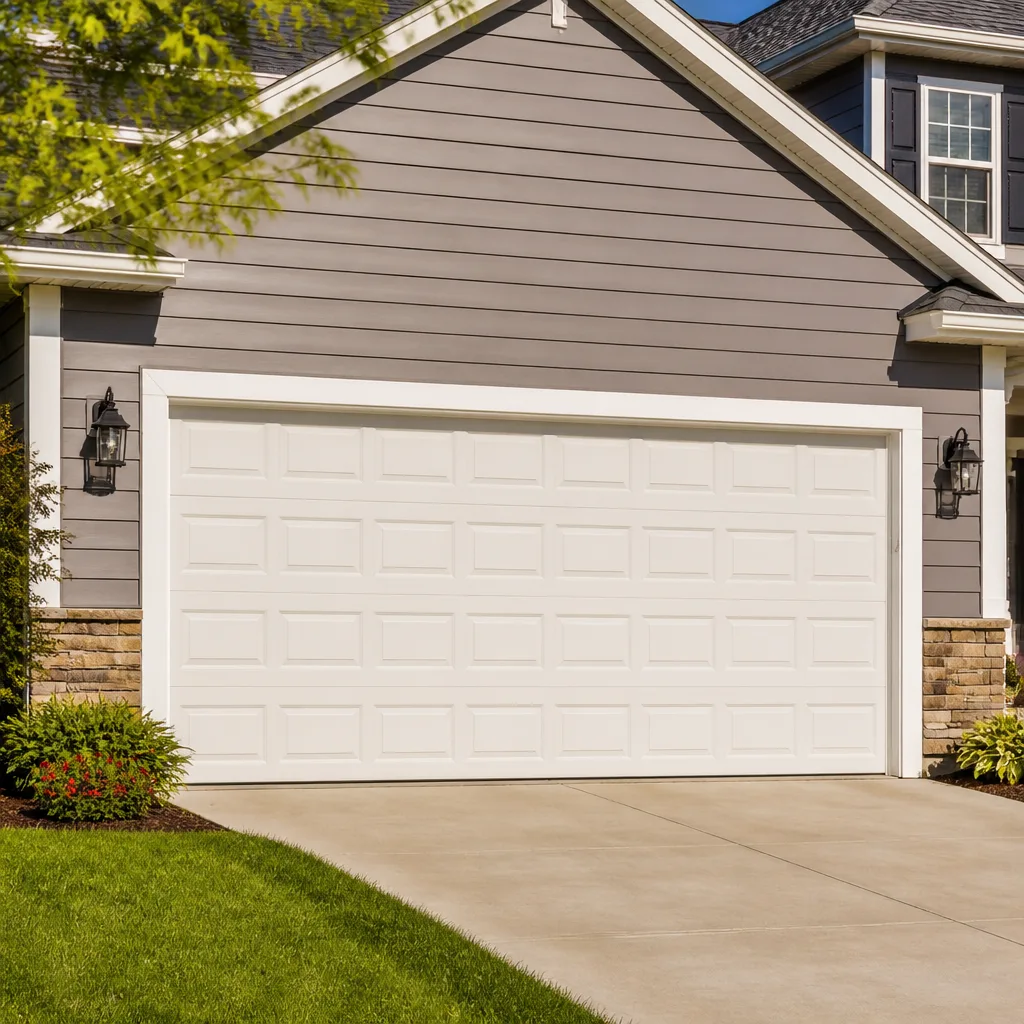 Raised-panel steel
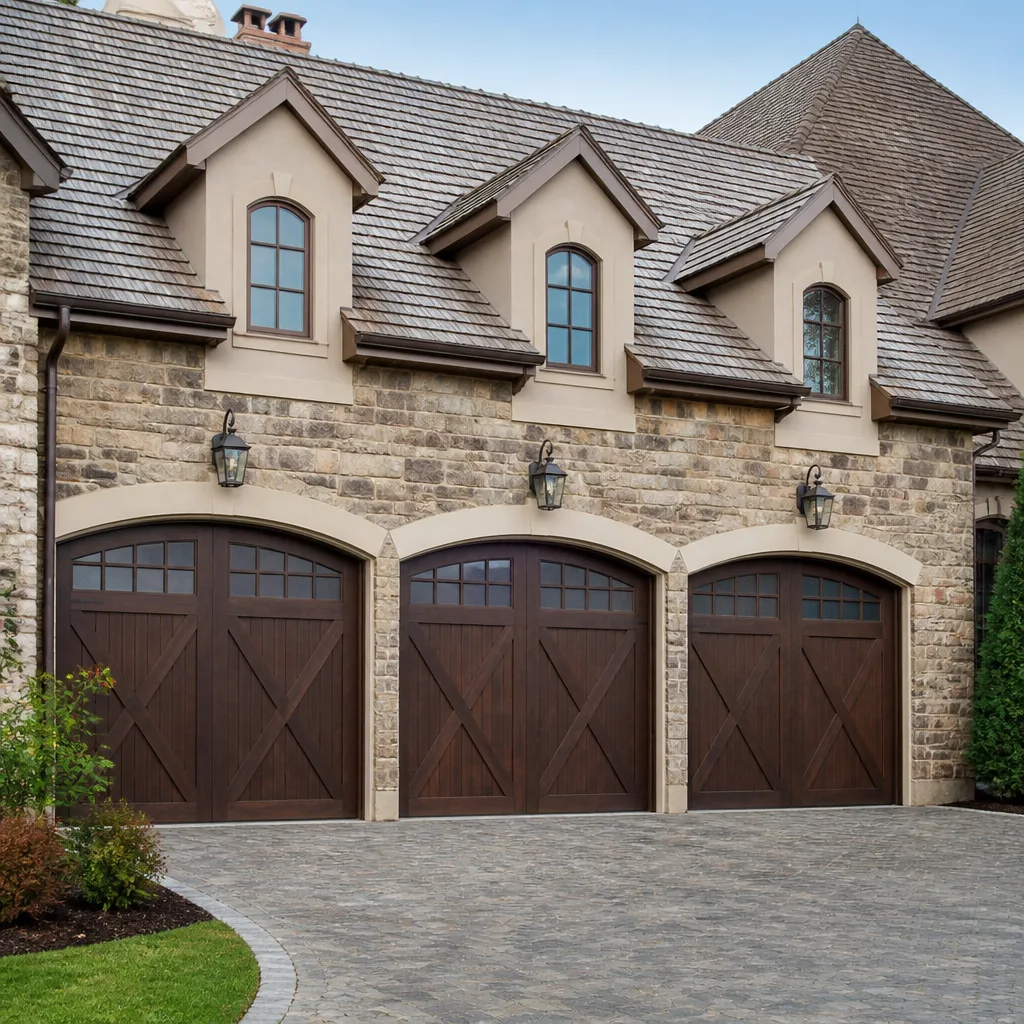 Carriage house
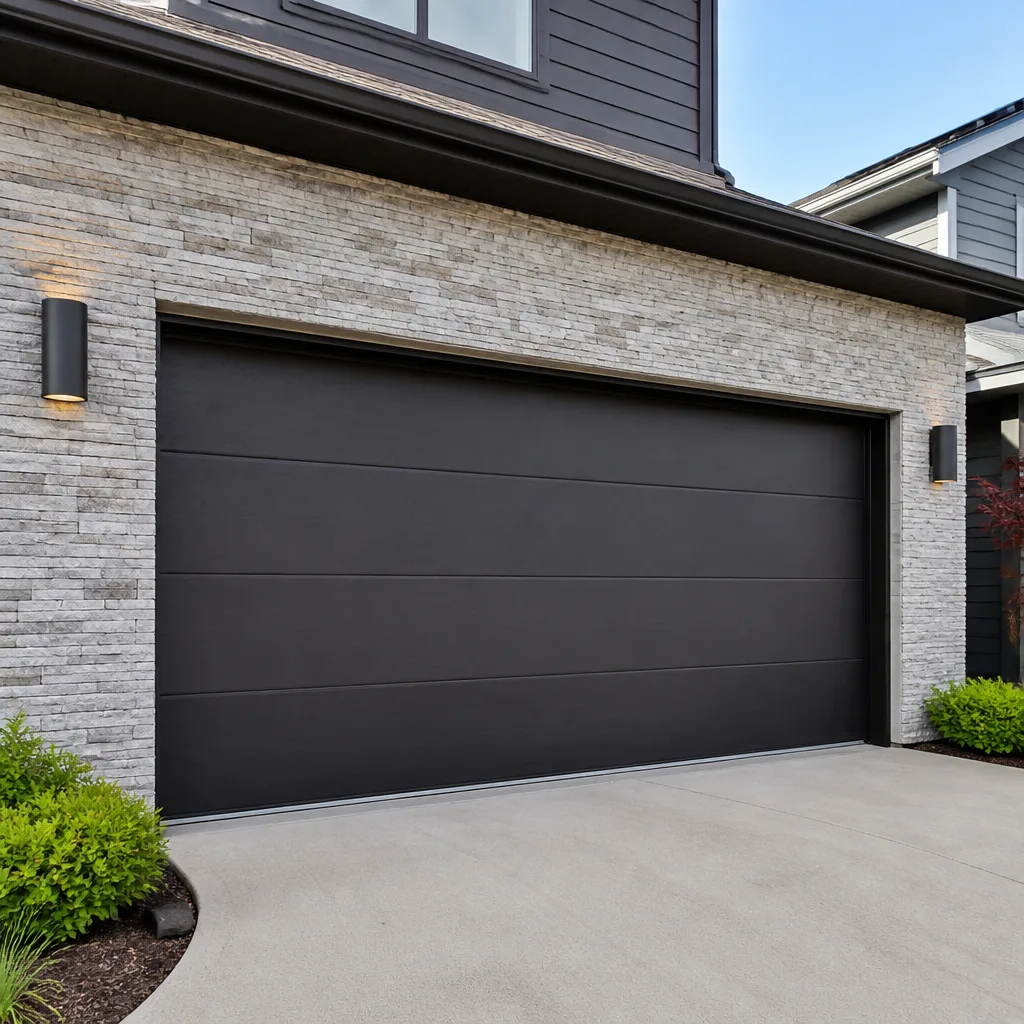 Modern flush
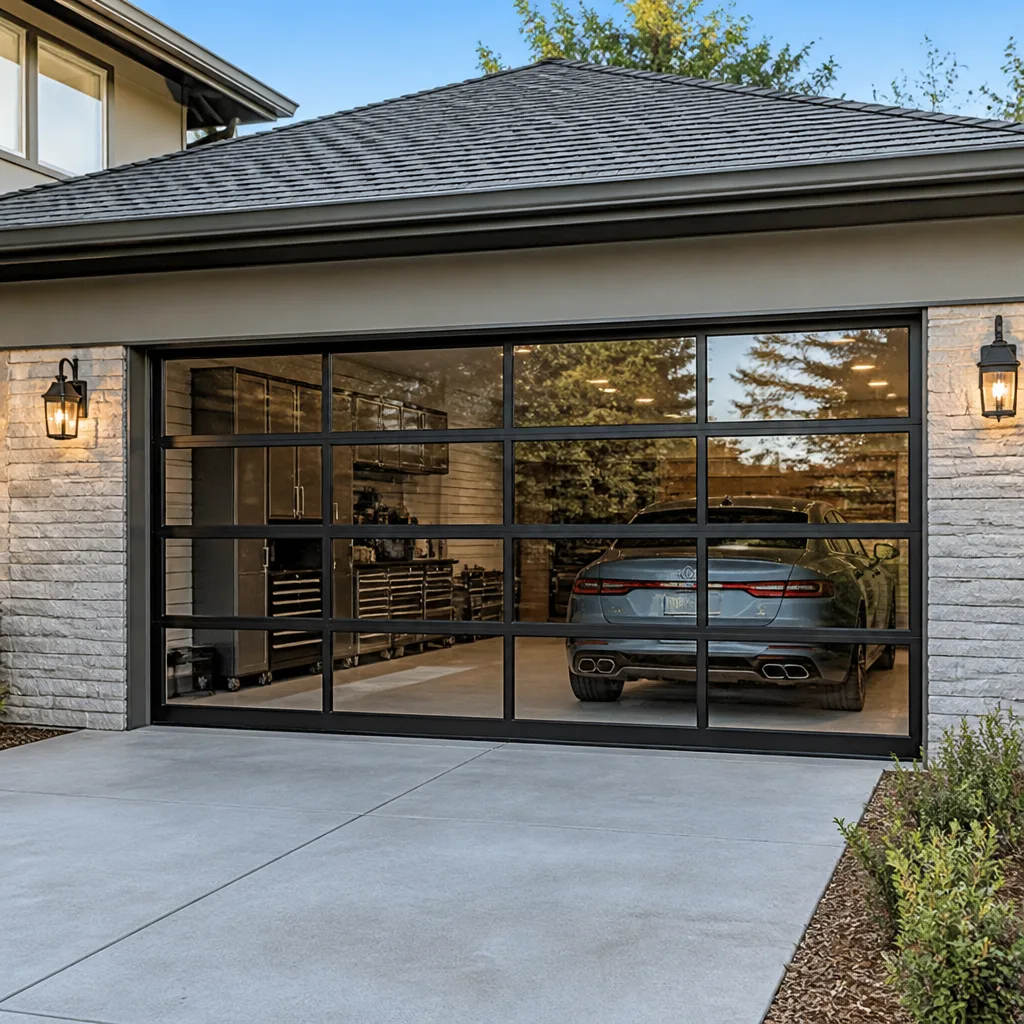 Full-view glass
 LiftMaster openers
 Chamberlain openers
Full 25-point door and opener safety check with every visit - springs, cables, rollers, tracks, and your LiftMaster or Chamberlain opener included
You get a price before we start. It does not change when the pro arrives.
Get your free estimateGarage Door Repair Maintenance Checklist for Davie Homeowners
Most garage door checklists tell you to lubricate your springs twice a year. That’s the problem. Do the right task at the wrong time and you make things worse. In Davie, humidity peaks in late summer and rain comes sideways through the wet season, so a lubricant that protects hardware in a dry climate can turn into a sticky dust magnet here in August. This guide isn’t a generic calendar. It’s a sequenced checklist built around how South Florida weather actually treats garage doors, with clear go/no-go points for when you can handle something yourself and when a failing part needs a trained technician today.
Quick Answer
A garage door maintenance checklist for Davie should focus on five things: lubricating moving parts with a humidity-safe product (not WD-40), testing balance and auto-reverse monthly, checking weather seals before and after the wet season, inspecting rollers and hinges for rust, and watching springs and cables for early wear signs. Most of this takes 15 minutes a month. The parts that will actually shut your door down – springs, cables, and opener force limits – are the ones most homeowners never check.
Styles & brands we work with
- Raised-panel steel
- Carriage house
- Modern flush
- Full-view glass
- LiftMaster openers
- Chamberlain openers
Table of Contents
- Why Timing Matters More Than the Task List in Davie
- The Monthly Five-Minute Checklist
- Which Lubricants Work in South Florida Humidity (and Which Damage Hardware)
- How to Test Door Balance and Travel Limits Safely
- Testing Auto-Reverse Without Tools
- Your Davie Seasonal Calendar: Wet Season vs. Dry Season
- The Three Components Most Homeowners Never Check
- Go/No-Go: What You Can Fix vs. What Needs a Technician
Why Timing Matters More Than the Task List in Davie
A garage door in Davie lives in a tougher environment than the same door in Arizona or Ohio. Humidity sits high through most of the year, and the wet season dumps rain for months at a stretch. Heat cycles the metal, moisture works its way into every hinge pin and roller bearing, and the pressure-treated lumber and stucco walls common in Davie homes hold that moisture against the door frame. A component that gets a two-year lifespan up north might see half that here without attention.
That’s why a calendar copied from a national chain’s blog doesn’t serve you. It tells you to do things “in spring and fall” without knowing that a Davie spring lasts three weeks and a fall is more of a rumor than a season. The tasks stay the same. The order and the timing shift.
Here’s what we mean in practice. Lubricating a torsion spring with a thin, petroleum-based spray in dry January is fine. Doing the same thing in August, when the air in a Davie garage is thick enough to leave condensation on the door, attracts grit and holds it. That grit becomes grinding paste between the coils. You oiled the spring and shortened its life. Same task, different season, opposite result.
So the checklist below is organized around two questions. What needs doing? And when does it need doing in Davie specifically? If you get the second question right, the first one stops being a guessing game.
The Monthly Five-Minute Checklist
Do this once a month, ideally the same weekend morning so it becomes habit. No tools required for most of it. Have someone watch the door from outside while you run it if you can.
- Listen and watch as the door opens and closes. A healthy door is quiet and steady. A bang, a grind, a squeal, or a visible shudder means something is wearing. Note where the noise happens in the travel.
- Look at the door’s horizontal line. With the door closed, step outside. Is the bottom panel level? Is there a gap on one side? A sagging or crooked door usually points to a spring or cable problem.
- Check the weather seal at the floor. Run a hand along the bottom seal on a dry day. It should touch the floor across the whole width. Compression set is normal in heat; a seal that stays flattened in one spot has failed there.
- Test the auto-reverse. Full instructions are below. It takes 30 seconds and is the single most important safety test on the list.
- Watch the opener’s light or app. If your opener reports force or travel errors, don’t ignore them. Those messages mean the door is working harder than its limit allows, and the cause is usually mechanical.
None of this requires any understanding of garage door mechanics. You’re looking for changes from last month. A door that’s been quiet for a year and suddenly isn’t is telling you something.
Which Lubricants Work in South Florida Humidity (and Which Damage Hardware)
The single most common maintenance mistake we see in Davie is using the wrong lubricant. A spray can of general-purpose penetrating oil – the kind everybody has in the garage – is not a lubricant for garage door hardware. It’s a solvent with a light oil mixed in.
What not to use
- WD-40 or similar all-purpose spray. It cleans but doesn’t lubricate for long. In high humidity it also attracts and holds dust, which turns into a sticky film on springs and tracks. Springs need a lubricant that stays put under moisture. This type doesn’t.
- Cooking spray or vegetable oil. Attracts insects and molds in warm weather. In a Davie garage, you’ll find out.
- Grease on the tracks. Tracks are meant to be clean and dry. Grease in a track catches grit and slows the rollers. Keep them wiped down and free of debris.
- Graphite powder on springs. Fine for some applications but becomes inconsistent in high humidity.
What works
- A silicone-based or white lithium lubricant in a spray can, applied sparingly to hinge pins, roller bearings, and the torsion spring coils. These hold up in moisture and don’t attract as much grit.
- Purpose-made garage door lubricant if you want the safest choice. Most hardware and home stores carry one labeled for springs and hinges specifically.
- A clean rag for the tracks. Wipe dust and debris out monthly. Don’t grease them.
The timing rule: lubricate in the dry season when the garage is least humid, and recheck in the middle of the wet season. If you must lubricate in a damp month, apply a thinner coat and wipe off excess so it doesn’t hold moisture. Newer doors from Clopay or Amarr sometimes specify a lubricant in the owner’s manual – follow that if you have it. For older Wayne Dalton or Genie hardware where the manual is long gone, silicone spray is the safest default.
How to Test Door Balance and Travel Limits Safely
A balanced door lifts with one hand. An unbalanced one grinds through its springs, strains the opener, and wears out faster. Testing balance is a two-minute job, but it involves disconnecting the opener, so do it carefully and never stand under the door while it’s up.
- Close the door fully and disconnect the opener using the manual release cord hanging from the opener rail. You’ll hear a click. The door is now free of the opener.
- Lift the door by the bottom handle to about waist height. Don’t push it all the way up.
- Let go. A balanced door stays put. A door that drifts down or slams is losing spring tension. A door that drifts up has too much.
- Reconnect the opener by pressing the wall button once. The opener will re-engage automatically.
Travel limits control how far the opener pushes the door up and down. If the door doesn’t fully reach the floor on close, or the opener keeps running after the door is fully open, the limits need adjusting. On most modern openers – LiftMaster and Chamberlain especially – you adjust travel limits through the opener’s control panel or its smartphone app. On older Genie and Craftsman models, it’s a set of screws on the back of the unit that vary by model. If you don’t know your model or can’t find the manual, leave it. Badly set limits strain the door and the opener. Our garage door opener repair technicians deal with this every week on older units.
The safety caveat: never adjust the counterbalance springs, cables, or their drums yourself. Torsion springs are under extreme tension even when the door is down. Loosening the wrong bolt can release that tension with enough force to cause serious injury. Balance testing tells you the door has a spring problem. It doesn’t mean you should fix it. Call a trained technician.
Testing Auto-Reverse Without Tools
Auto-reverse is the safety feature that stops and reverses the door when it hits something. It’s also the one people skip testing because it feels fussy. It takes 30 seconds and doesn’t need a screwdriver.
There are two tests:
- The contact test. Put a roll of paper towels or a shoe box flat on the ground in the path of the door, near the middle. Close the door with the wall button. When the door touches the object, it should reverse and go back up. If it stops but doesn’t reverse, or crushes the object, the force limit is set too high and needs adjustment.
- The photo-eye test. With the door open, wave a broomstick across the beam between the two small sensors mounted at the bottom of the tracks near the floor. The door should refuse to close while the beam is interrupted. If it closes anyway, the photo eyes are misaligned, blocked by dirt, or failing.
Do both tests together. Passing one and failing the other still leaves you with an unsafe door. If either fails, that’s an immediate call – not a “next month” task.
A note on the opener force limit: this setting is what allows the door to reverse under resistance. Raising it to “make the door close properly” is the wrong fix for a door that’s binding. The right fix is finding the binding. We see this a lot in Davie when heat has warped a seal or swollen a wood panel, and someone has turned the force limit up to overcome it. That removes the safety margin.
Your Davie Seasonal Calendar: Wet Season vs. Dry Season
Forget “spring and fall.” Davie runs on two seasons: the wet season (roughly May through October) and the drier stretch from November through April. Here’s what to handle in each.
Before the wet season (around April)
- Inspect the bottom seal and side seals. Worn seals let rain-driven water into the garage where it pools against the door’s lower panel and hinges. Replace them before the daily afternoon storms start.
- Lubricate hinges, rollers, and springs with silicone or white lithium. Do this before the humid months, not during them.
- Check the door’s bottom panel and paint. A wood door with peeling paint at the bottom will absorb water fast. Touch up or repaint before the rain.
- Clean the tracks and look for rust spots on rollers. Rust on rollers becomes a grinding bearing by June.
During the wet season (May-October)
- Watch for rust on hinges and roller bearings monthly. Wipe any early rust and re-lubricate with a moisture-resistant product.
- Test the door after big storms. A sealed-up door can hide a warped panel or a seal that’s pulled loose.
- Expect opener strain. A swollen or warped door works harder to lift, and the opener feels it. If the opener suddenly reverses on its own, the door has more drag, not the opener a sudden fault.
Dry season (November-April)
- Deep-clean tracks and re-lubricate everything properly.
- Do a full balance and travel-limit test when the garage is least humid.
- Look at the springs and cables closely. This is the season to spot a worn spring before it fails.
One local wrinkle: in Davie, homes near the canals and older neighborhoods with mature trees deal with more than humidity. Falling leaves and palm debris collect in the tracks, especially in a garage that faces the street. A monthly wipe-out prevents most of the noise complaints we hear about.
The Three Components Most Homeowners Never Check
In our experience, three parts account for the majority of emergency garage door calls in Davie. All three are invisible during normal use. All three give warning signs long before they fail.
1. The torsion or extension springs
The spring is what actually lifts a door that weighs a couple hundred pounds. You don’t see it working because the opener only adds force on top of the spring’s lift. A spring wears out gradually: it stretches, loses tension, and the door gets heavier to lift. You notice it as a “slower” door or an opener that sounds like it’s working harder. Springs fail suddenly at the end. A snapped spring means the door won’t open or slams down hard. Visual check: look for a visible gap in a torsion spring above the door, or a stretched extension spring beside the track. Davie’s heat cycles wear springs faster than a milder climate, so this is a check worth doing every few months. Never touch, adjust, or try to wind a spring yourself – they’re under enough tension to cause serious injury. This is a dedicated spring repair job for a trained technician.
2. The cables
Cables run along the sides of the door and connect the spring system to the bottom corners. They fray. Look along each cable for stray strands – the same way you’d check a bicycle brake cable. A frayed cable is close to snapping, and a snapped cable drops the door. Check with the door down and don’t grab the cables. Just look. If you see fraying or a slack cable, call.
3. The opener’s force limit and travel settings
These settings live in the opener’s control panel and nobody looks at them until the door “acts up.” If the force limit is turned up too high to overcome a dragging door, the auto-reverse stops working. If travel limits are set wrong, the door doesn’t close all the way or the opener keeps running past the top. On LiftMaster or Chamberlain openers with a Wi-Fi app, you can often see the force and travel status through the app and reset limits from your phone. On a Genie or older Craftsman, the settings are on the unit’s panel and vary by model. If you’re not sure, the safest move is to have a technician check them.
Those three – springs, cables, and opener settings – together cause more emergency calls than every other part combined. A checklist that skips them misses the point.
Go/No-Go: What You Can Fix vs. What Needs a Technician
The most useful thing a checklist can do is tell you when to stop. Here’s the line we draw.
You can handle these yourself
- Wiping debris from the tracks
- Lubricating hinges, roller bearings, and springs with a proper product
- Adjusting the opener force limit and travel limits if you have the manual or an app
- Replacing a worn bottom seal (a tube-style seal slides in and out of its channel)
- Resetting the auto-reverse after a power outage
- Wiping rust spots from a hinge pin and re-lubricating
Call a technician for these
- Any work involving the springs, cables, or the drums that hold them
- A door that’s sagging, crooked, or won’t open with the manual release
- Visible fraying on a cable, or a cable that’s gone slack
- An opener that reverses on its own after you’ve adjusted the force limit
- Auto-reverse that fails even after cleaning the photo eyes
- A door with serious panel damage – impact, warping, or a hinge pulled out of the panel
- Any noise that gets louder month over month, especially a bang at the start of travel
Our rule of thumb: if the fix involves tension in the spring system or force in the opener, it’s a technician’s job. Everything else is homeowner territory. garage door repair for Davie homes covers all of these scenarios, and it’s worth a call when the checklist turns up a problem you can’t safely handle.
Common Mistakes to Avoid
- Lubricating in peak humidity. Doing your seasonal lubrication in August pulls grit into springs and hinges. Do it in the drier months or apply a very thin coat and wipe off excess.
- Using WD-40 or cooking oil on the hardware. Penetrating oils don’t lubricate long and attract debris. Cooking oil draws insects. Use silicone or white lithium.
- Greasing the tracks. Tracks should stay dry and clean. Grease binds grit and slows the rollers.
- Raising the opener force limit to fix a dragging door. A door that’s working hard has a mechanical problem. Turning up the force to hide it disables the safety margin.
- Ignoring a slowly sagging door. A sagging door almost always means spring or cable tension is going. Catching it early avoids a much bigger repair.
- Adjusting the torsion springs yourself. The most dangerous mistake on this list. Those springs are under enough tension to cause serious injury. Never do it.
- Treating the wet-season seal check as optional. A worn seal lets rain-driven water into the garage and against the lower panel. It’s the difference between a dry door and a rusted one.
See the difference
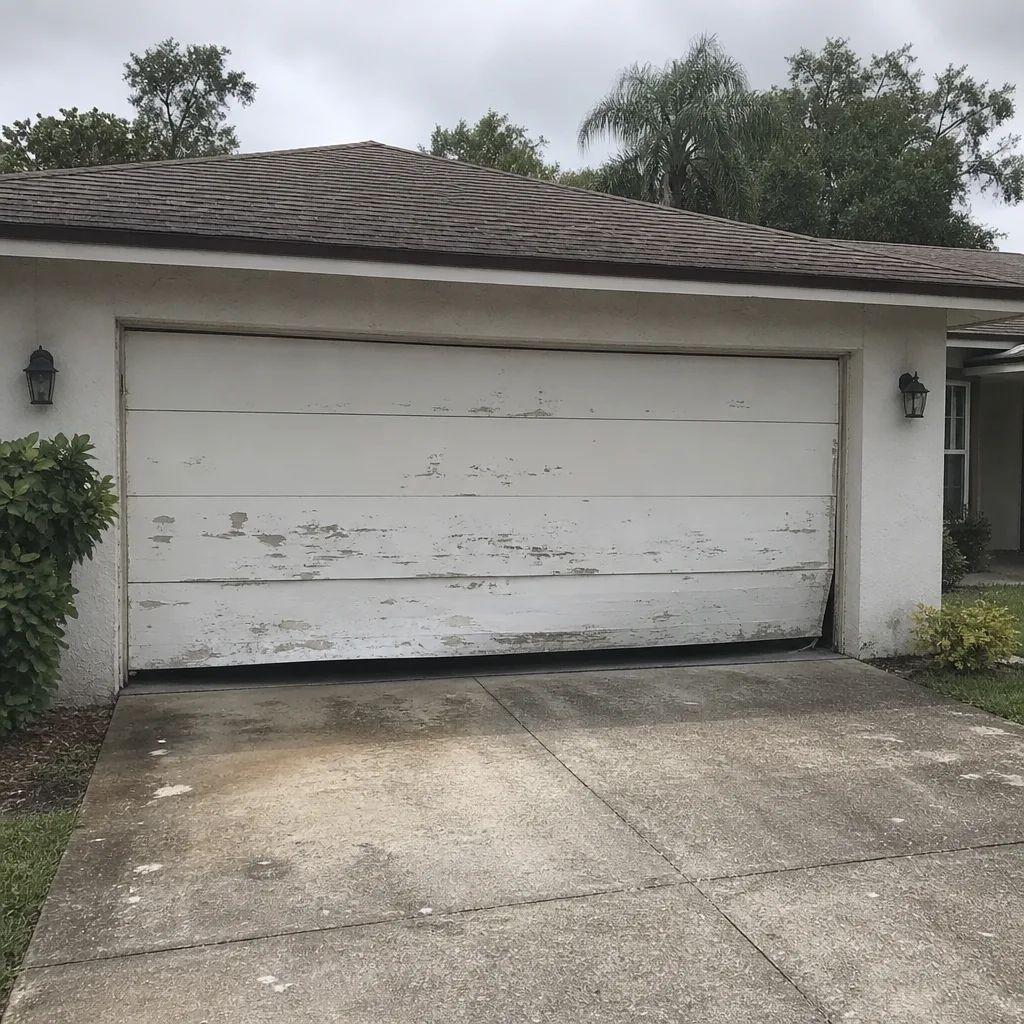 Before
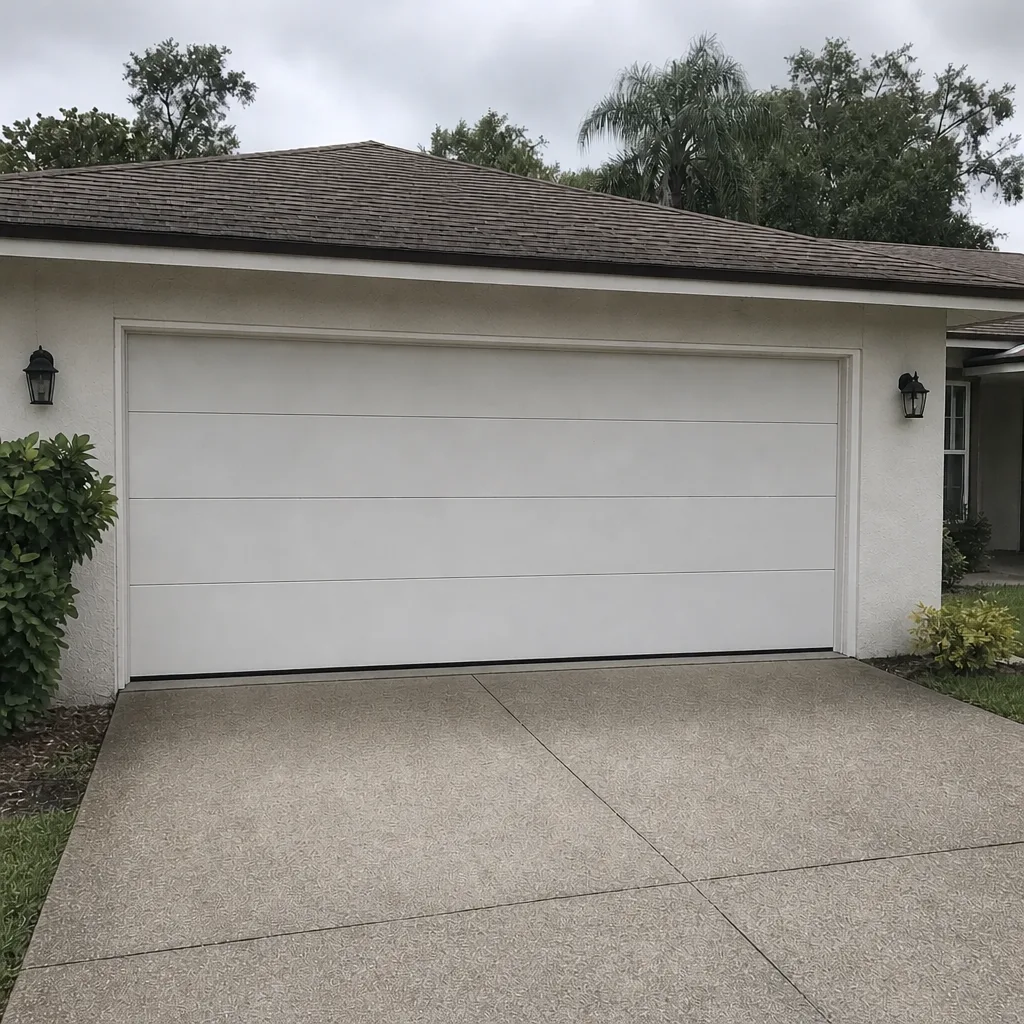 After
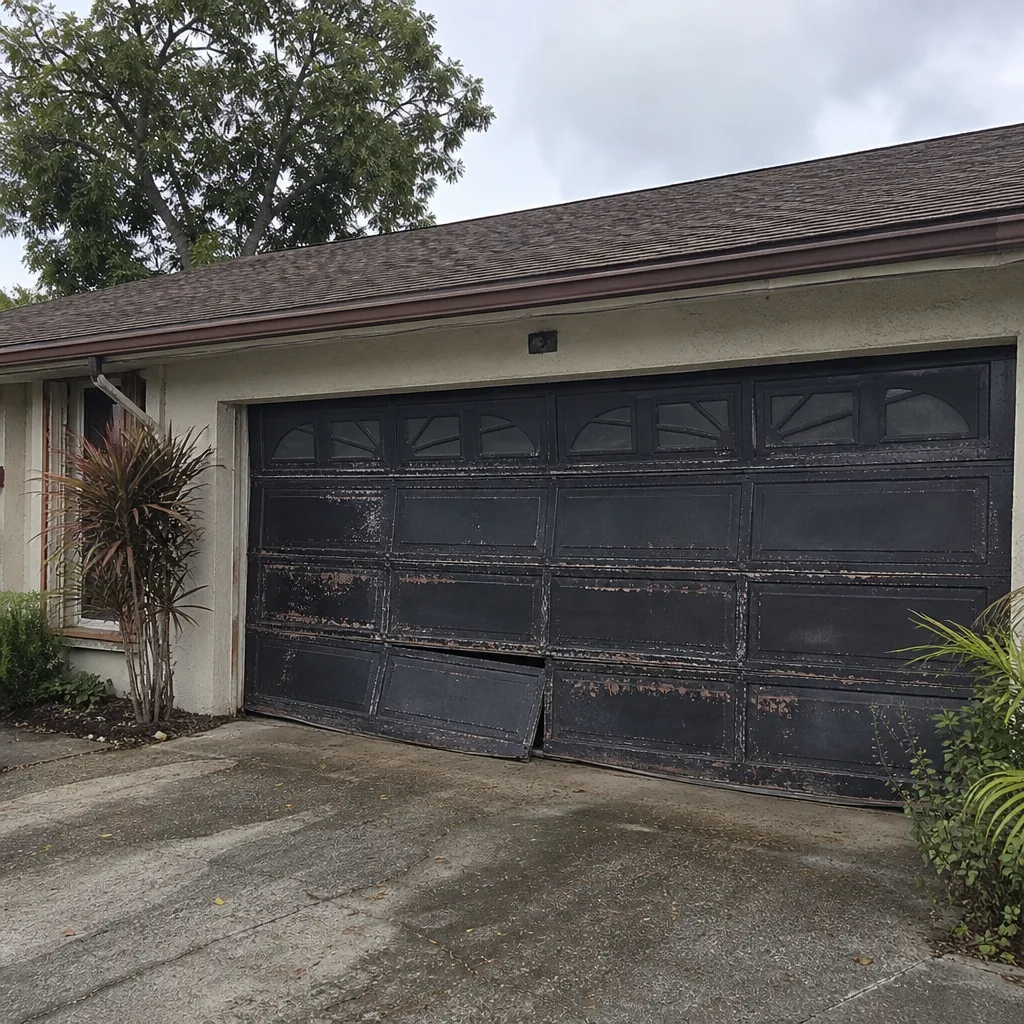 Before
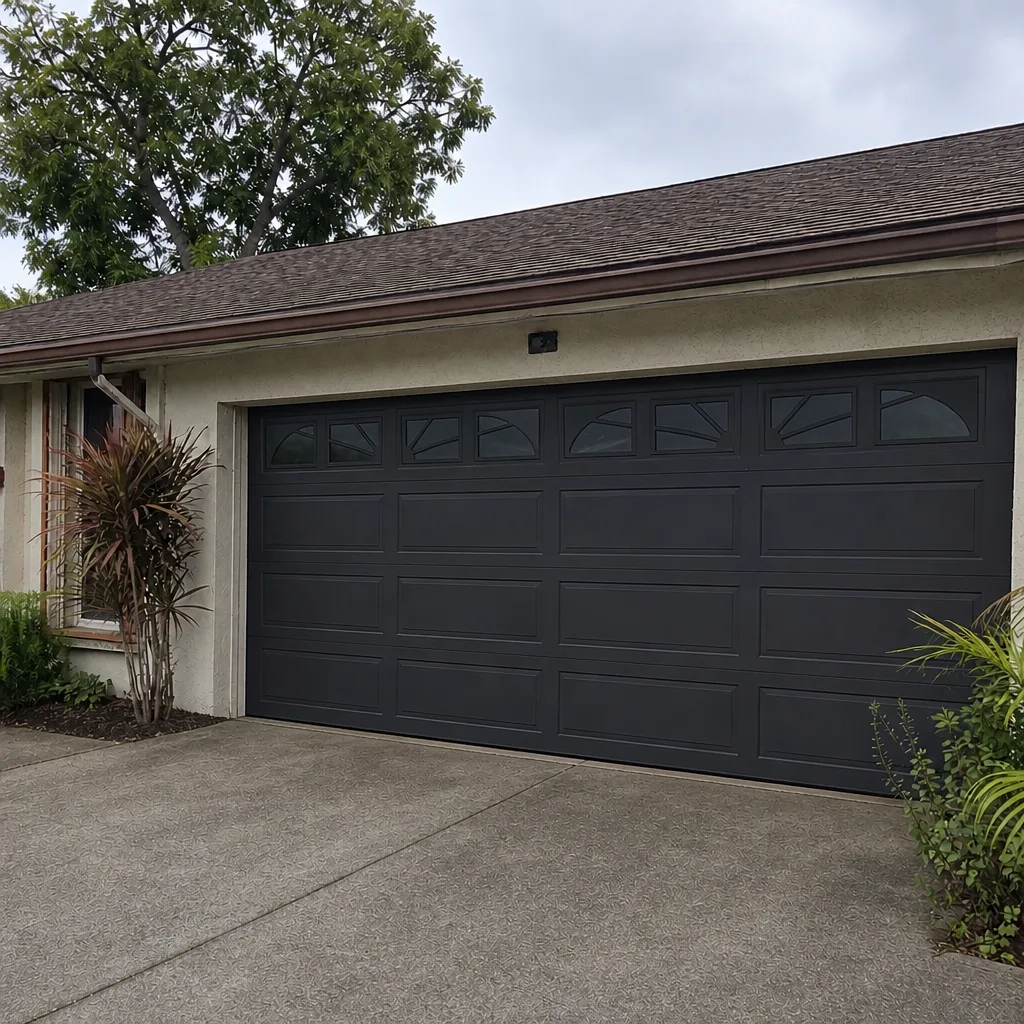 After
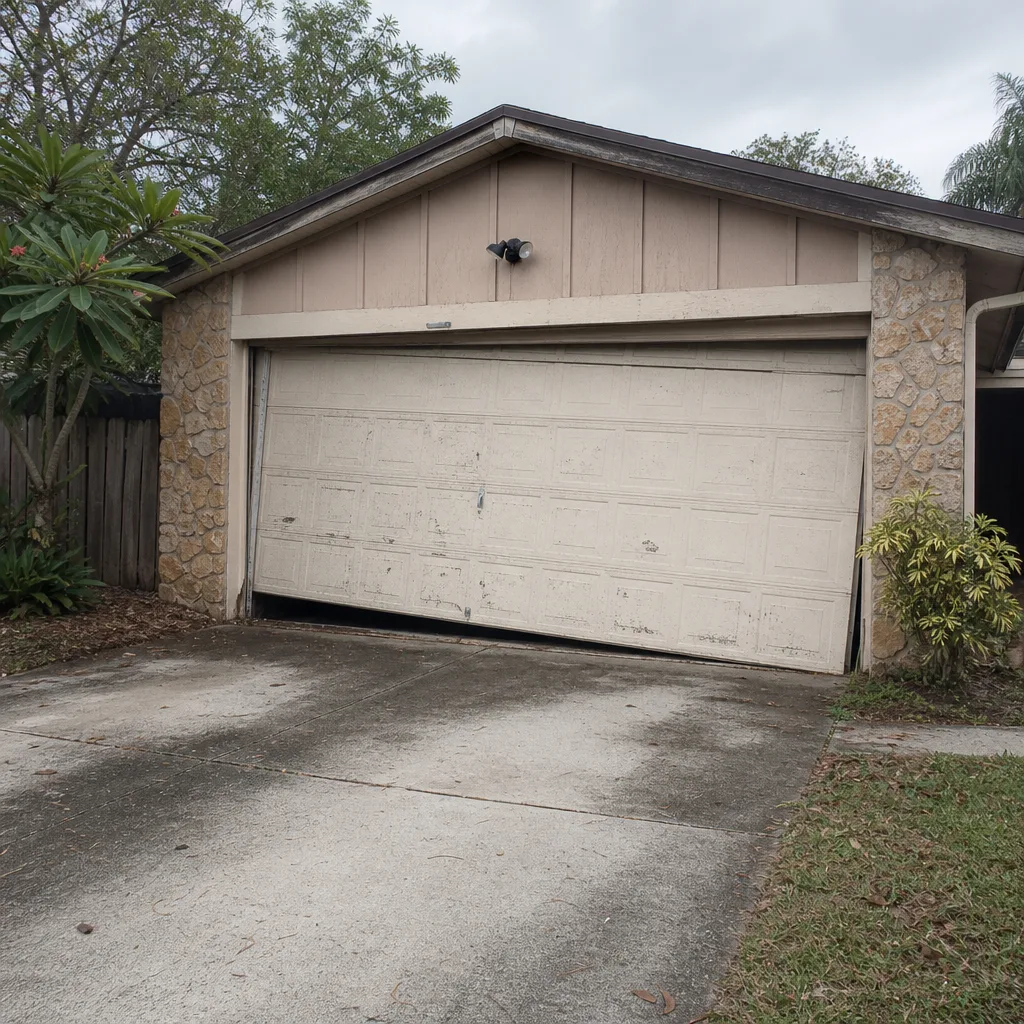 Before
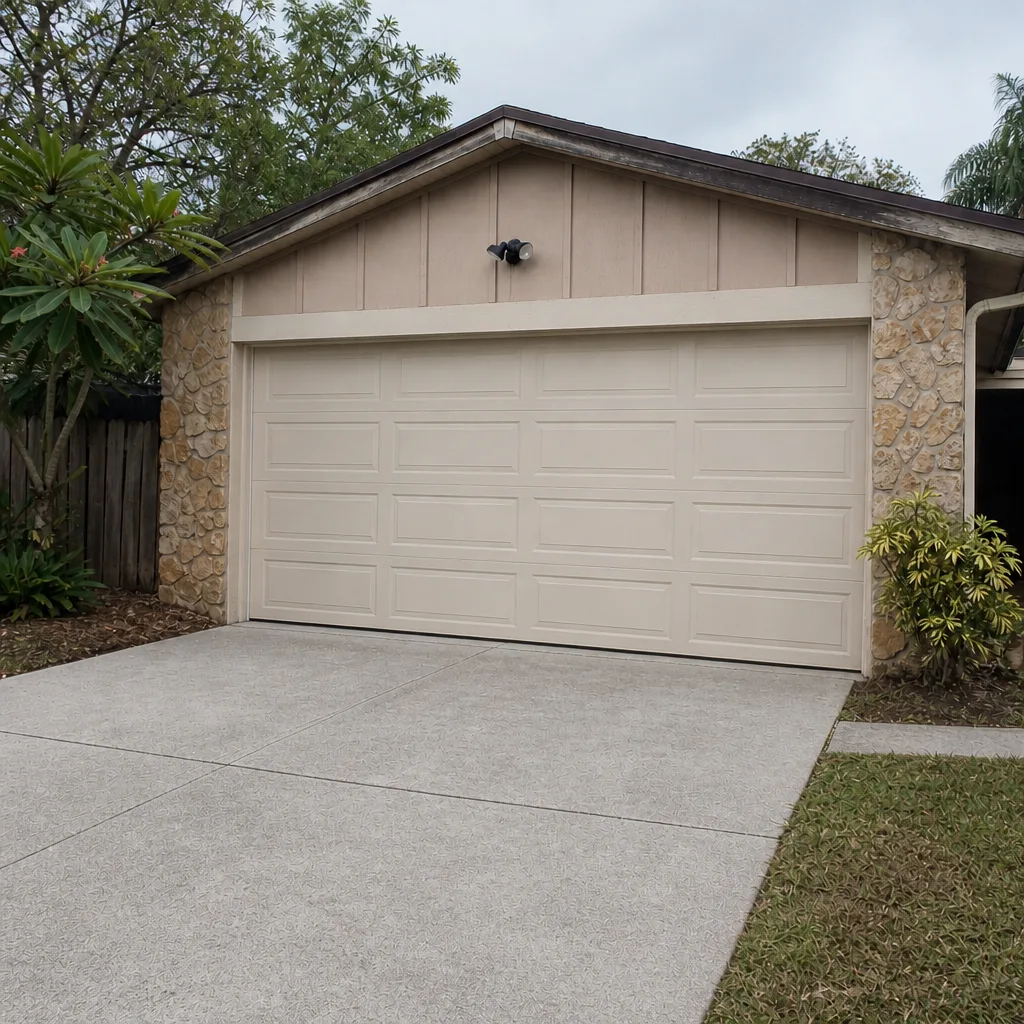 After
When to Call a Professional
Call a professional any time the checklist turns up a spring, cable, or opener force issue. Those three account for the majority of garage door failures we see in Davie, and they’re the ones a homeowner should never fix alone. Call us also for any door that’s stuck, crooked, or won’t reverse on contact with an object. If the door won’t move at all and someone needs to get a car out of the garage, that’s an emergency call, not a scheduled visit – we handle emergency garage door service as a core part of what we do. For a full replacement or a smart opener upgrade, call for a free measure and a written price. Davie Garage Door Repair Co offers free estimates in Davie – call (866) 406-5925. The price is quoted and agreed before any work starts, and the written estimate is the price.
The Bottom Line
A garage door maintenance checklist is only as useful as its timing. In Davie, that means lubricating before the wet season, checking seals before the storms, and looking at springs and cables when the humidity drops. Do the five-minute monthly checks, respect the go/no-go line, and treat the three components most people skip – springs, cables, and opener settings – as the real priority. A door that works every time is the result of a few small habits, not a big repair. And when something crosses the line from “tune-up” to “tension,” stop and call.
Frequently Asked Questions
Lubricate the hinges, roller bearings, and springs two to three times a year, with the primary application before the wet season. Do it in the drier months so the lubricant doesn’t attract grit and moisture. A mid-wet-season recheck, without a full application, is a good idea. Call (866) 406-5925 if you’re not sure your hardware is holding up – estimates are free.
Use a silicone-based or white lithium spray, or a product specifically labeled for garage door springs and hinges. Avoid WD-40 and similar penetrating oils – they clean but don’t protect for long and attract dust. Purpose-made garage door lubricant is the safest choice. If you’re not sure which product to use on your door, call (866) 406-5925 for guidance – estimates are free.
No. Torsion and extension springs are under extreme tension, and touching the wrong part can cause serious injury. A snapped spring is a job for a trained technician with the right tools. Call (866) 406-5925 for spring repair – the price is quoted and agreed before any work starts.
An opener that reverses on its own, grinds, or doesn’t close fully is usually a limit or force setting issue, not a dead opener. Adjusting the settings often fixes it. Call (866) 406-5925 for opener repair – estimates are free, and our technicians work on LiftMaster, Chamberlain, Genie, and other major brands.
Check the springs visually every few months – look for a visible gap or a stretched spring – and have a technician assess them during your annual tune-up. Davie’s heat cycles wear springs faster than a milder climate. Call (866) 406-5925 if you see any change – estimates are free.
Yes, if the seal is a standard tube-style that slides in and out of its channel. You’ll need the correct size and a few minutes. If the seal is glued or the door’s bottom panel is warped, call a professional. For a new installation or a full panel replacement in Davie, call (866) 406-5925 for a free measure and written price.
When the checklist turns up something you can’t safely handle – a spring, a cable, or an opener that won’t behave – call Davie Garage Door Repair Co at (866) 406-5925 for a free estimate. We work on all eight major brands, so your Clopay, Amarr, Wayne Dalton, or Genie door gets a technician who knows that hardware.
Written by the team at Davie Garage Door Repair Co.