Last updated November 21, 2026
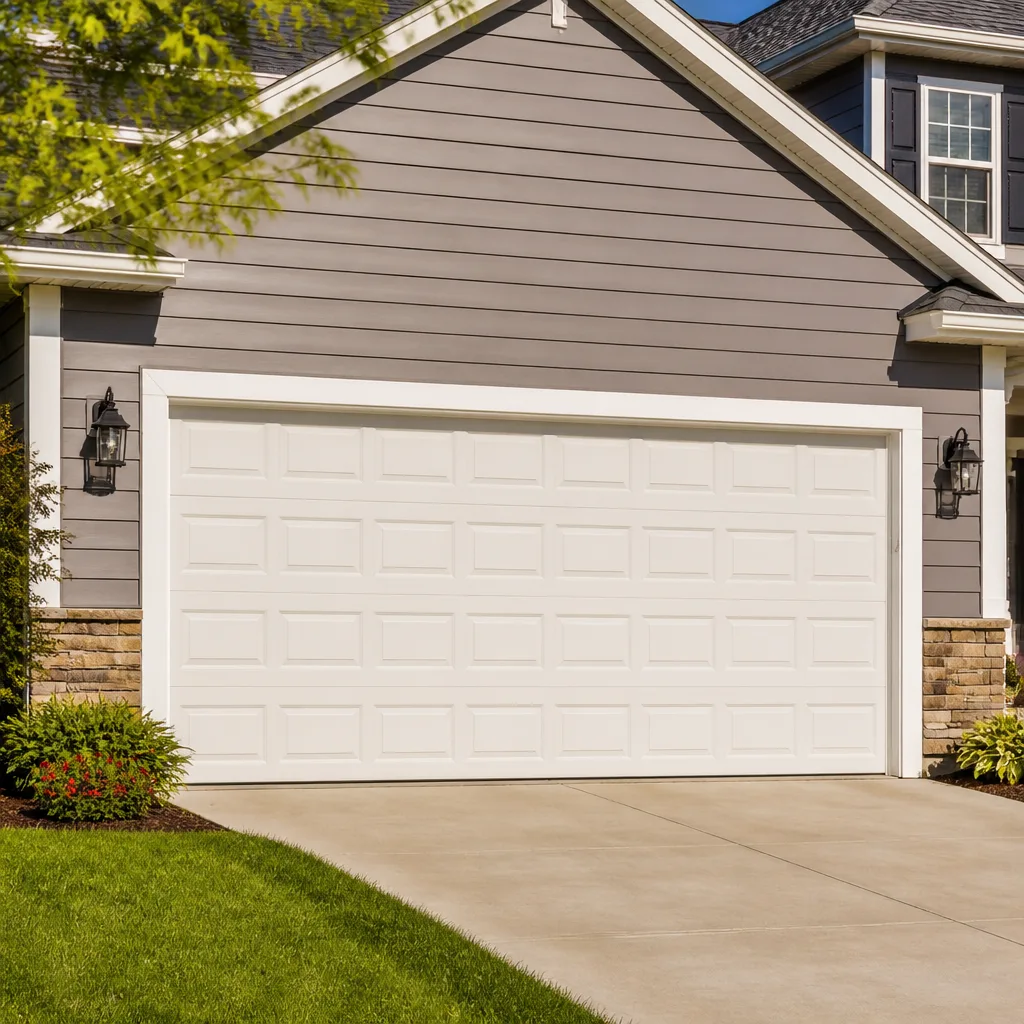 Raised-panel steel
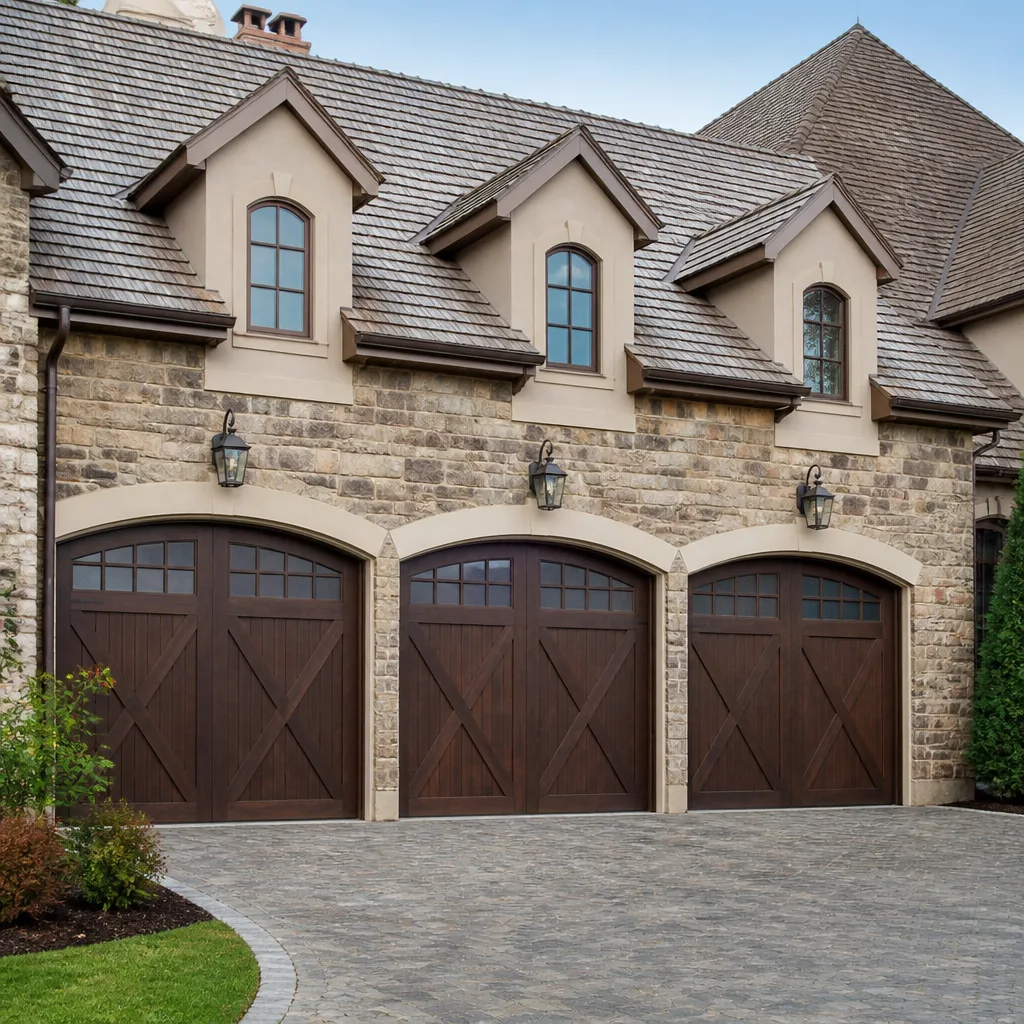 Carriage house
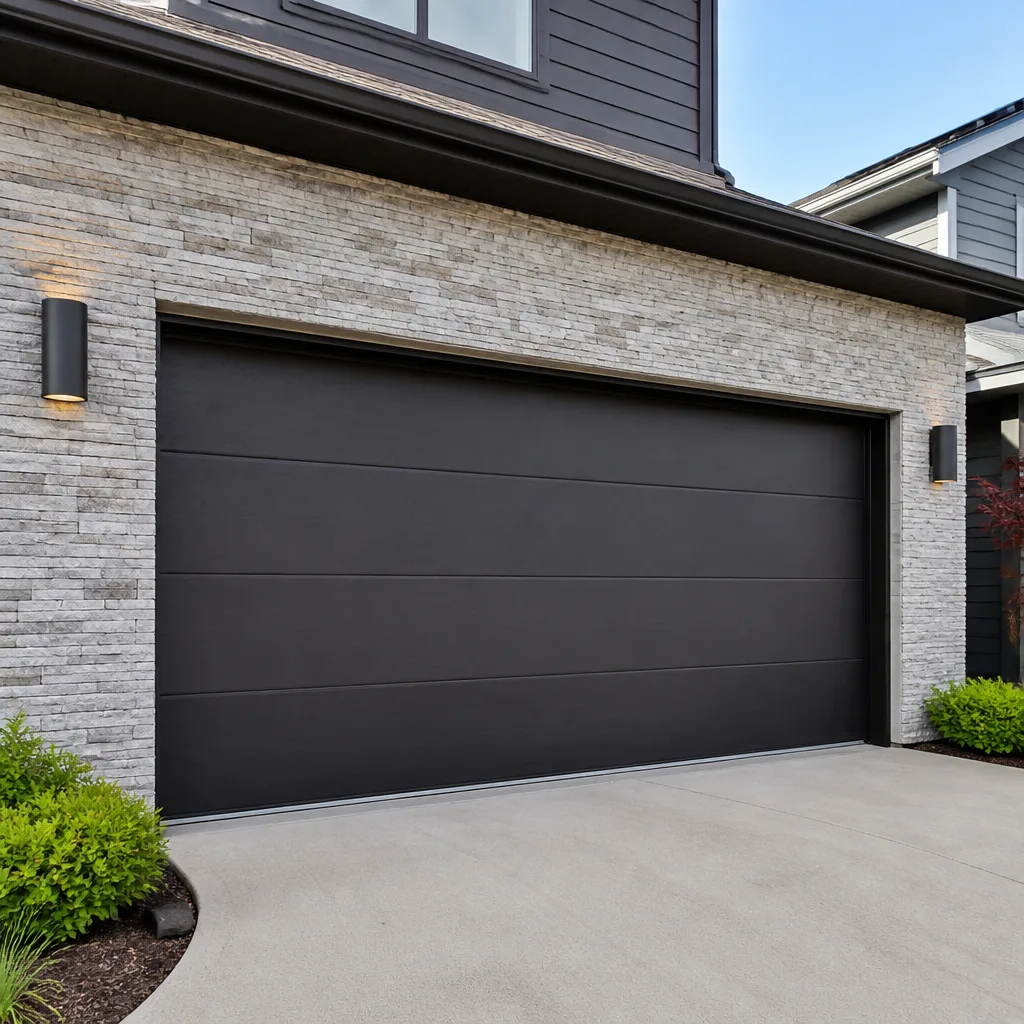 Modern flush
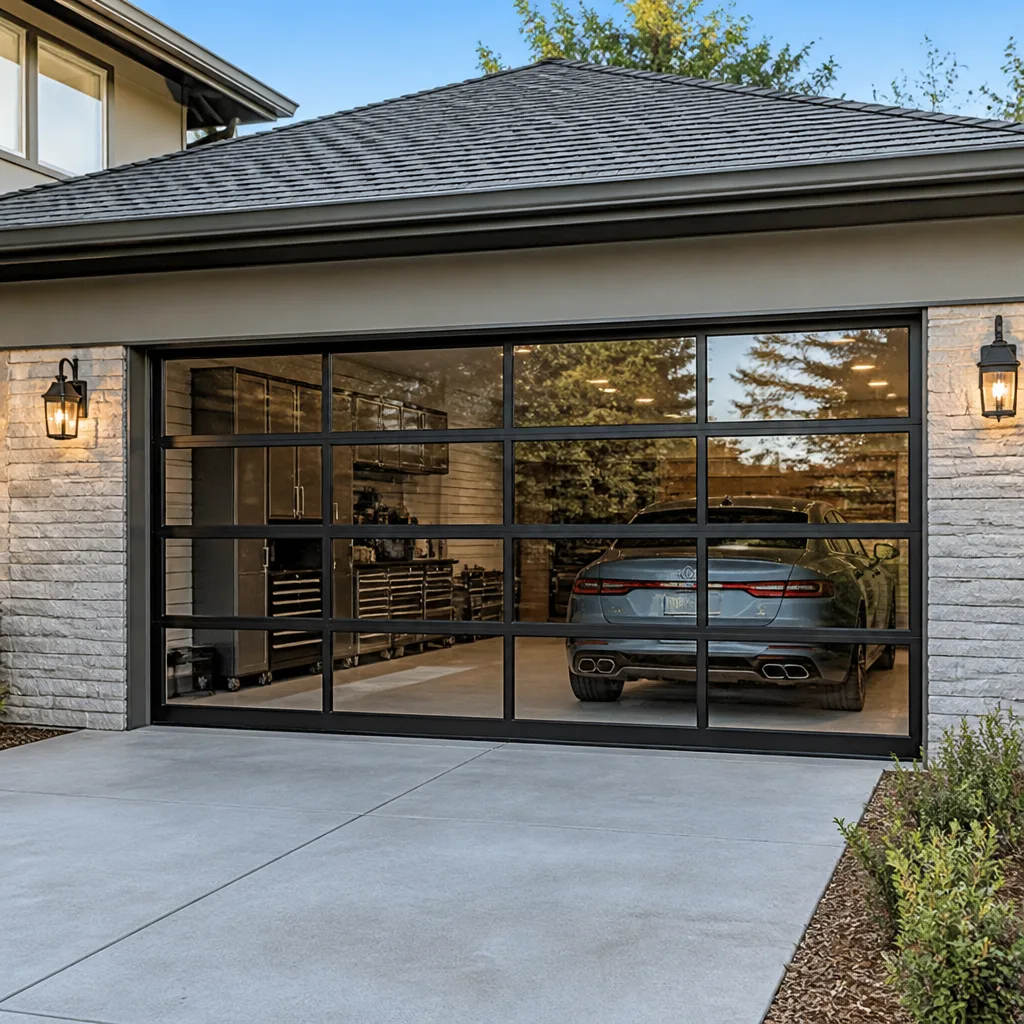 Full-view glass
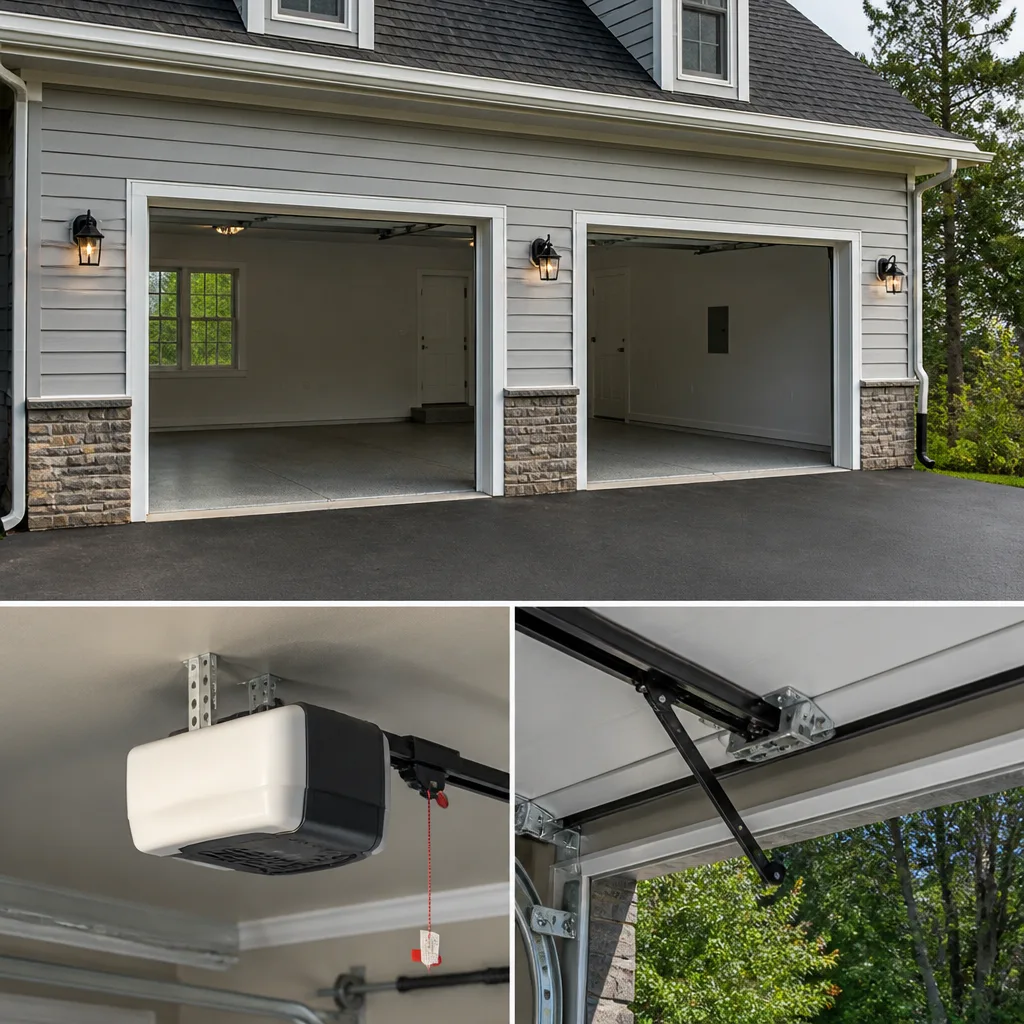 LiftMaster openers
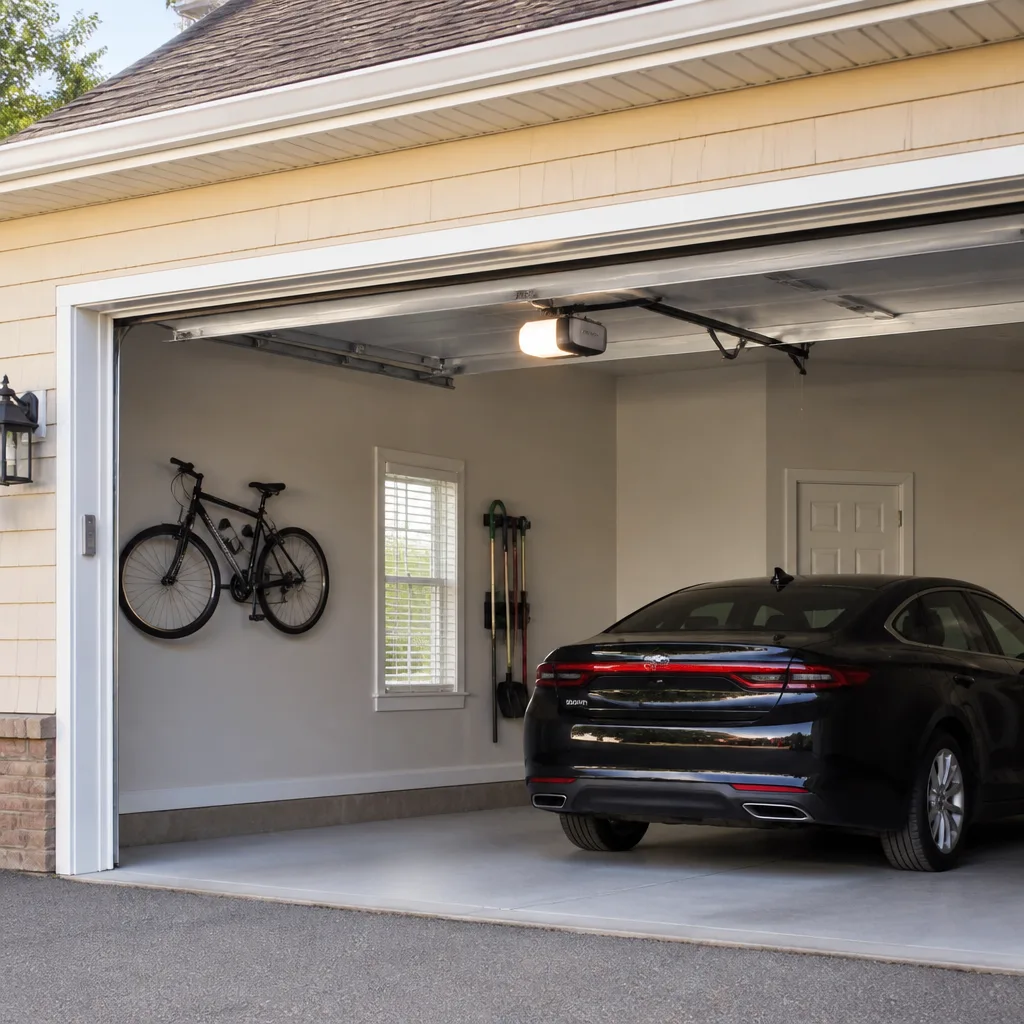 Chamberlain openers
Full 25-point door and opener safety check with every visit - springs, cables, rollers, tracks, and your LiftMaster or Chamberlain opener included
You get a price before we start. It does not change when the pro arrives.
Get your free estimateSeasonal Garage Door Care for Davie: Year-Round Homeowner’s Guide
Most garage door maintenance advice was written for a place with four distinct seasons, and it doesn’t fit Davie. We don’t get a slow autumn cool-down that gives hardware a gentle warning before winter. We get a dry season, a wet season, and a storm season that overlaps both, and your door takes more punishment in the months you’d least expect it. The task homeowners skip, pre-season wind-hardware prep, is the one that matters most for a door that has to hold its shape when the wind picks up. This guide maps garage door care to the Davie calendar, not a northern one, and shows you what to check, when to check it, and when to hand it to a trained technician.
Quick Answer
Garage door care in Davie follows two seasons, not four: dry season (roughly November through April) and wet and hurricane season (roughly May through October). The highest-value task of the year is inspecting and tightening wind-load hardware, seals, and the emergency release before storm season peaks in late summer. A professional inspection timed to May, plus a post-storm walkthrough after any named system, catches the damage your door won’t announce until it’s already a bigger problem.
Styles & brands we work with
- Raised-panel steel
- Carriage house
- Modern flush
- Full-view glass
- LiftMaster openers
- Chamberlain openers
Table of Contents
- Why Davie Doesn’t Have Four Seasons
- Pre-Hurricane Season Checklist (April-May)
- Post-Storm Inspection Protocol
- Dry Season Tasks (November-April)
- How Humidity Affects Your Motor and Smart Sensors
- Why a May Inspection Beats “Twice a Year” Advice
- What You Should Never Adjust Yourself
- Common Mistakes to Avoid
- When to Call a Professional
Why Davie Doesn’t Have Four Seasons
The standard seasonal garage door advice you’ll find online assumes a freeze coming and a thaw after. That calendar doesn’t describe Davie. Here, the year splits into a dry stretch and a hot, humid, storm-prone stretch, and the garage door meets different stressors in each one. In the dry months, overnight temperatures dip just enough that metal contracts a little, seals stiffen, and hardware that was snug in the heat can loosen its grip. In the wet months, salt-free but humid air is relentless, and electronics inside the opener motor have to keep working through moisture your northern counterparts never deal with.
The hurricane overlay is the part that changes everything. From roughly June through November, storm season adds wind pressure to whatever the door is already handling. A garage door is the largest moving opening on most Davie homes, and it’s built to hold its position against wind when the hardware is sound. When springs, hinges, or the bottom seal have quietly degraded over the wet season, the door’s ability to stay in its tracks under load drops with them.
That’s why we organize care around two anchors: getting wind-hardware tightened and inspected before storm season builds, and walking the door after any named storm passes. The dry-season tasks fill in the rest. If you think of the calendar that way, you’ll stop doing maintenance at the wrong time of year and start doing it when it actually protects the house.
Pre-Hurricane Season Checklist (April-May)
April and May are the window where you still have dry mornings and the storm season hasn’t fully arrived. This is when a thorough inspection gives you the most runway to fix anything it turns up. The point of the pre-season checklist isn’t cosmetic. It’s wind-load hardware integrity, seal condition, and the emergency release, because those are the parts that decide how the door behaves when the pressure is on.
Work through these in order, and stop if anything looks like a job for a trained technician:
- Inspect the bottom seal. Look for cracks, flattening, gaps at the corners, or a seal that’s peeled away from the panel. A compromised bottom seal lets wind-driven rain and air in and can let the door rattle instead of sitting steady. Replace a failing seal before the wet season.
- Check hinges and rollers for play. Wiggle each hinge plate and roller stem. They should feel snug but able to move. Loose hinges let panels shift under wind load. Worn rollers cause the door to tilt in its tracks.
- Look at the track for bends or obstructions. A track that’s out of line forces the door to fight it on every cycle and weakens its response under wind pressure. Clear debris and flag any dents.
- Test the emergency release. Pull the red handle with the door in the closed position and confirm the door detaches from the opener smoothly, then reconnects cleanly. This is the mechanism that lets you operate the door by hand if power is cut during a storm. If it sticks or won’t re-engage, get it serviced.
- Balance-test the door by hand. With the door disconnected, lift it to waist height and let go. It should hold roughly in place. If it drops fast or rises on its own, the springs aren’t counterbalancing correctly, and that’s a job for a professional.
- Confirm the opener’s force and travel settings. A door that has to be forced to close is a door that may not close fully under pressure. Let a technician check these, since misadjusting them is dangerous.
Get through that list in April, order any replacement parts you need, and have the door in shape before the first real system of the season rolls in.
Post-Storm Inspection Protocol
After a named storm moves through, the damage that matters isn’t always the panel hanging off its track. Some of the worst problems are quiet: a hinge that took a knock and now lets the door rack slightly, a spring with a fresh stress point, a bottom seal pushed out of its channel, or a track knocked a fraction out of alignment. None of these announce themselves with noise. They show up as a door that runs a little rougher, closes a little unevenly, or strains more than it used to.
Walk the door with a deliberate, top-to-bottom sequence once the storm has fully passed and it’s safe to be outside:
- Visual pass over every panel. Look for dents, creases, popped seams, or a panel that’s no longer flush with its neighbor. Even a mild dent can reduce how the panel resists load.
- Check both vertical tracks and the horizontal track run. Look for bends, kinks, or a base plate that’s shifted. The door should sit level in its tracks.
- Examine the springs. Look for a visible gap in a torsion spring or a stretched, sagging extension spring. Never try to remove or adjust a spring yourself.
- Recheck the bottom seal and side jamb seals. Wind-driven rain works its way under and around seals. Confirm they’re still seated.
- Run the door one full cycle. Listen for new grinding, scraping, or a change in pitch from the opener. Watch for jerky travel.
- Test the safety reversal. Put an object in the door’s path and confirm it reverses on contact.
If anything on that walkthrough looks off, leave the door closed and call for an inspection. Operating a storm-stressed door can turn a minor issue into a panel or track failure. Davie homeowners who catch these early often avoid a much larger repair. If you do need hands-on help, we handle garage door repair and can diagnose the problem before it gets worse.
Dry Season Tasks (November-April)
Once the heavy wet season winds down, the door’s environment changes. Overnight temperatures cool enough that metal contracts, seals firm up, and the door cycles through more of a temperature swing each day than it did in the summer. That’s when dry-season maintenance pays off, and it’s focused on lubrication, alignment, and the hardware that wants a little attention after months of humidity.
- Lubricate rollers, hinges, and the torsion shaft bearings. Use a garage-door-rated lubricant, not general household oil. A dry-season session quiets the door and reduces wear on moving parts.
- Re-torque hinge and bracket bolts. The daily expansion and contraction cycle can loosen fasteners over time. Snug them down, but don’t overtighten.
- Check track alignment. With the door closed, the tracks should be plumb and parallel. Realign only if you’re confident; otherwise flag it for a technician.
- Inspect the weather stripping around the perimeter. Cooler, drier air can shrink seals slightly. Confirm they still contact the door frame.
- Test the opener’s safety features. The reversal and force settings should be checked at least once in the dry season, since this is the time to catch small drifts.
- Clean the photo-eye lenses. Dust and pollen build up on the safety sensors at the base of the tracks. Wipe them and confirm the door reverses when the beam is broken.
Dry season is also the practical window for any planned upgrade. If the door has been struggling, this is when you have time to price and schedule a replacement without storm season pressure. We can walk you through garage door installation options and measure your opening for a written quote.
How Humidity Affects Your Motor and Smart Sensors
The opener motor, the circuit board inside it, and the smart sensors that tie your door into a phone app all live in the garage, and in Davie that garage spends months in high humidity. Moisture in the air doesn’t usually kill electronics outright, but it stresses them. It corrodes contacts, it can fog the small optical sensors, and it makes the whole system a little less reliable over time. That shows up as a door that occasionally doesn’t respond, a remote that works some days and not others, or a smart opener that drops off its app and needs to be re-paired.
If your home has a garage door opener repair need that keeps coming back, humidity and moisture are worth suspecting. A few practical habits help:
- Keep the header area dry. Check for any water intrusion near the opener mounting point, especially after storms, and fix the source rather than the symptom.
- Wipe photo-eye lenses monthly in the wet season. Moisture and dust combine into a film that scatters the beam.
- Watch for corrosion on the opener’s terminals. A technician can clean and protect them during a service visit.
- Re-pair smart openers after a power bump. A quick reset restores a stable connection.
Modern connected openers from LiftMaster and Chamberlain are common in Davie garages, and they’re better than legacy hardware at signaling when something is off. We’re factory-familiar with both, so when a smart opener acts up, we know where to look first instead of troubleshooting blind.
Why a May Inspection Beats “Twice a Year” Advice
The generic advice to inspect your garage door twice a year is fine as far as it goes, but it doesn’t tell you when twice actually matters. For a Davie home, the smart timing is one professional inspection in May, before storm season peaks, plus your own post-storm walkthrough after any named system. That May inspection gives you the maximum gap between “here’s what’s wrong” and “here comes the wind,” which is exactly when you want time on your side to order parts and schedule repair.
A professional inspection in May covers what you can’t safely do yourself: spring condition and tension, opener force and travel settings, track and panel alignment, and the overall balance of the door. A technician checks the wind-load hardware as a system, not part by part, and can flag a hinge or a spring that’s close to failing before it does. That’s the difference between an inspection that catches a $180 repair and one that catches a door that won’t run at all.
On top of the May visit, a dry-season walkthrough gives you a second checkpoint at a quieter time. But if you only did one thing all year, the May inspection is the one that lines up with the actual risk in Davie. Scheduling it early beats scrambling in the days before a storm arrives. For the full scope with our team behind it, our Davie Garage Door Repair Co page connects you with a crew that services what it sells, from opener to full installation.
What You Should Never Adjust Yourself
Some garage door tasks are safe for any homeowner. Lubrication, cleaning sensors, and a visual walkthrough are all fine. Other parts of the system carry real injury risk, and this is where knowing your limits matters more than any checklist. Torsion and extension springs store a great deal of energy, and adjusting them, or trying to detach one, can cause a serious injury in a fraction of a second. A trained technician treats them with caution every time, and so should you.
Leave these to a professional:
- Spring adjustment, replacement, or removal of any kind. Don’t touch the springs. If a spring looks broken or weak, stop using the door and call.
- Track straightening beyond a quick visual check. A bent track under load can let the door slip or fall. Let a technician align or replace it.
- Opener force and travel limit settings. These decide whether the door closes fully and whether it reverses when it should. Misadjusting them is a safety issue.
- Cable inspection and replacement. Cables on torsion systems are under high tension and fail without warning.
Spring repair is one of the most mechanically dangerous jobs on a garage door, and it’s the reason we offer it as a dedicated service. We’d rather handle it safely than have a homeowner take a chance at home.
Common Mistakes to Avoid
- Treating the door like a four-season system. Doing maintenance on a fall-winter-spring-summer calendar misses the actual storm season that drives most of the risk in Davie. Build your checkpoints around April-May and the wet season instead.
- Skipping the emergency release test. Homeowners rarely pull the red handle until the power is out and the door won’t detach. Test it during the pre-season checklist so you know it works before you need it.
- Ignoring the bottom seal. It looks like trim, but it’s a wind-load and rain-barrier component. A cracked or separated seal lets in water and lets the door rattle under pressure.
- Using the wrong lubricant on hinges and rollers. Household oil and WD-40 attract grit and dry out. Use a garage-door-rated grease so parts stay protected through the humid months.
- Trying to adjust springs yourself. It’s the single most dangerous mistake a homeowner can make on a garage door. Springs and cables are a professional job, no exceptions.
- Waiting until the first storm warning to inspect. By then parts are hard to source fast, and the door’s condition is a guess. Schedule the May inspection so you’re not repairing in a rush.
- Trusting the door to work after a storm without a walkthrough. Quiet damage, like a shifted track or a hinge with play, shows up later. Do a deliberate post-storm pass every time.
When to Call a Professional
Call a professional if the door won’t move, runs unevenly, or reverses without a clear cause; if you see a broken spring, a frayed or slack cable, or a bent track; if the opener strains, makes grinding noises, or the smart app drops connection repeatedly; or if the door has been through a named storm and you’re not sure it’s sound. A door that’s off balance, missing a seal, or has fresh damage after a storm is worth a technician’s eyes before you operate it again. Davie Garage Door Repair Co offers free estimates in Davie. Call (866) 406-5925, and we’ll give you a written price before any work begins.
See the difference
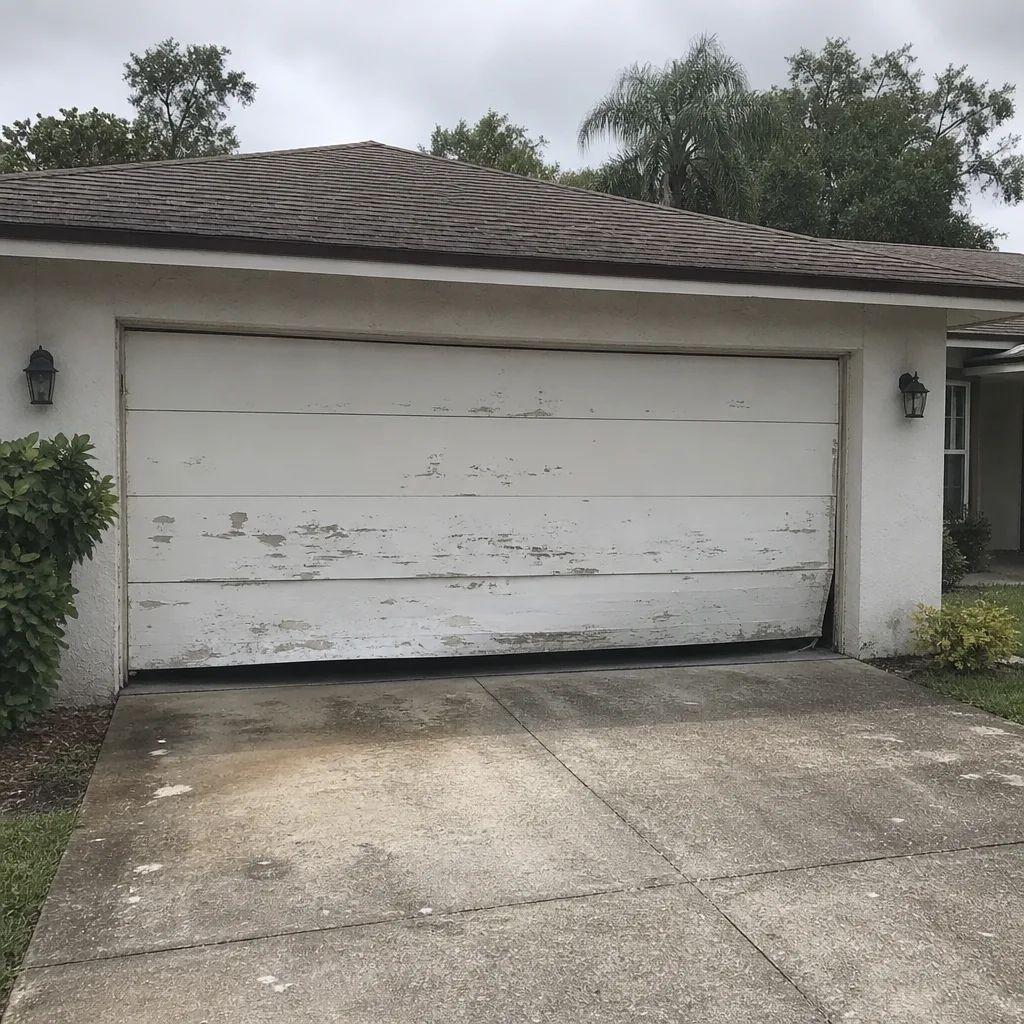 Before
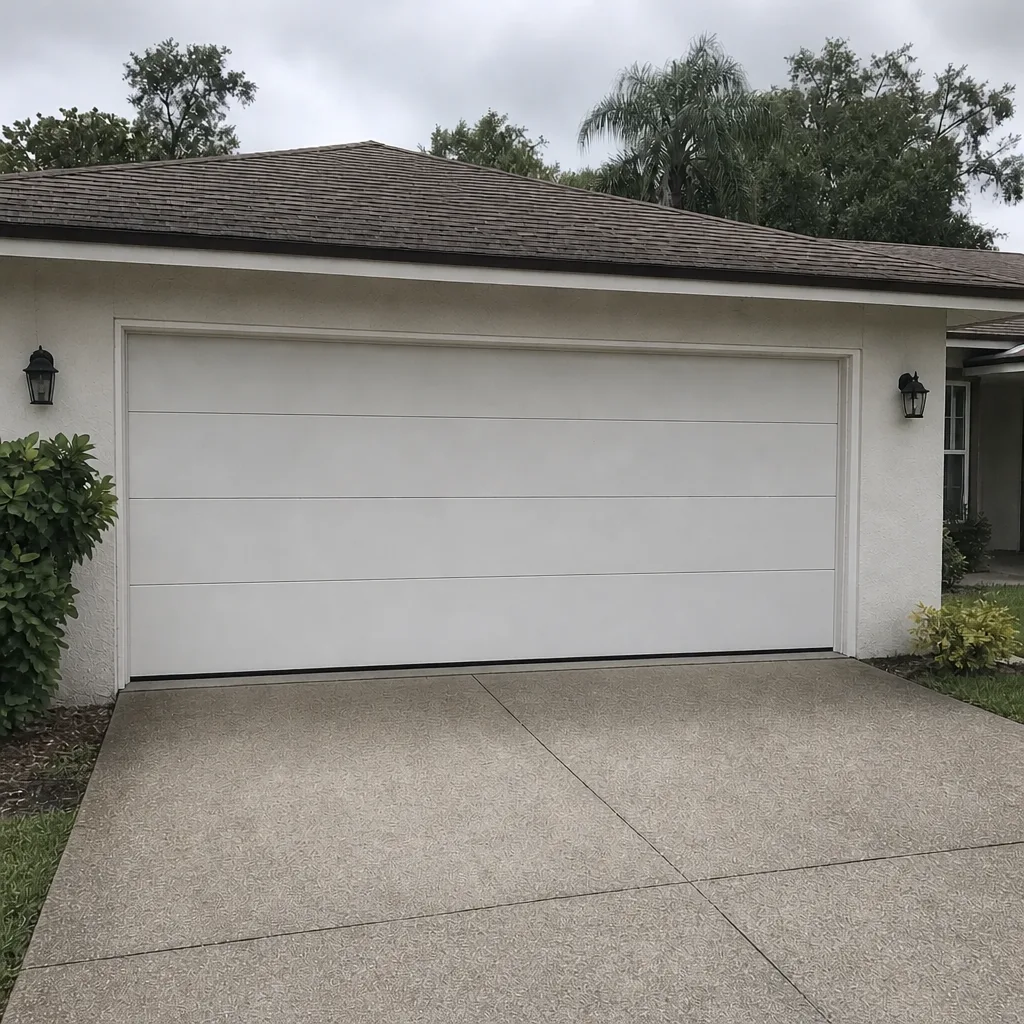 After
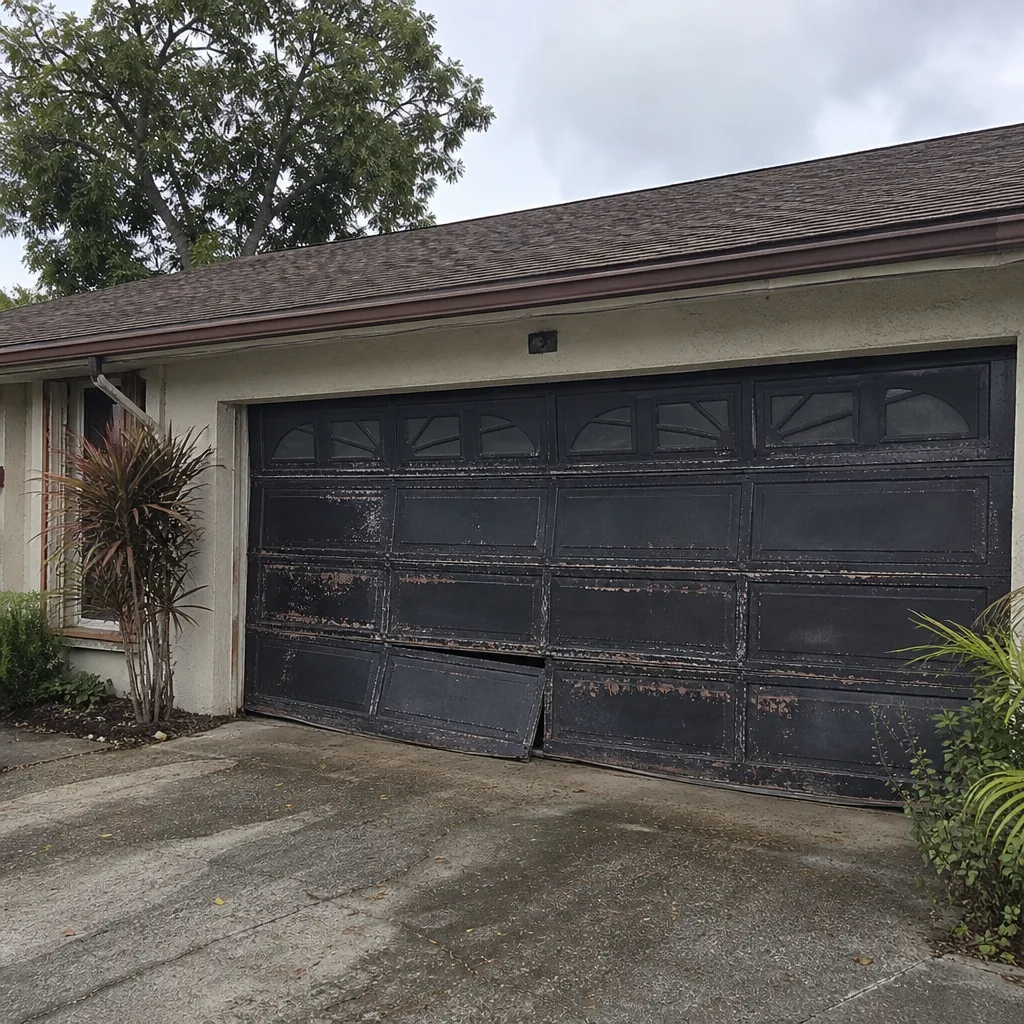 Before
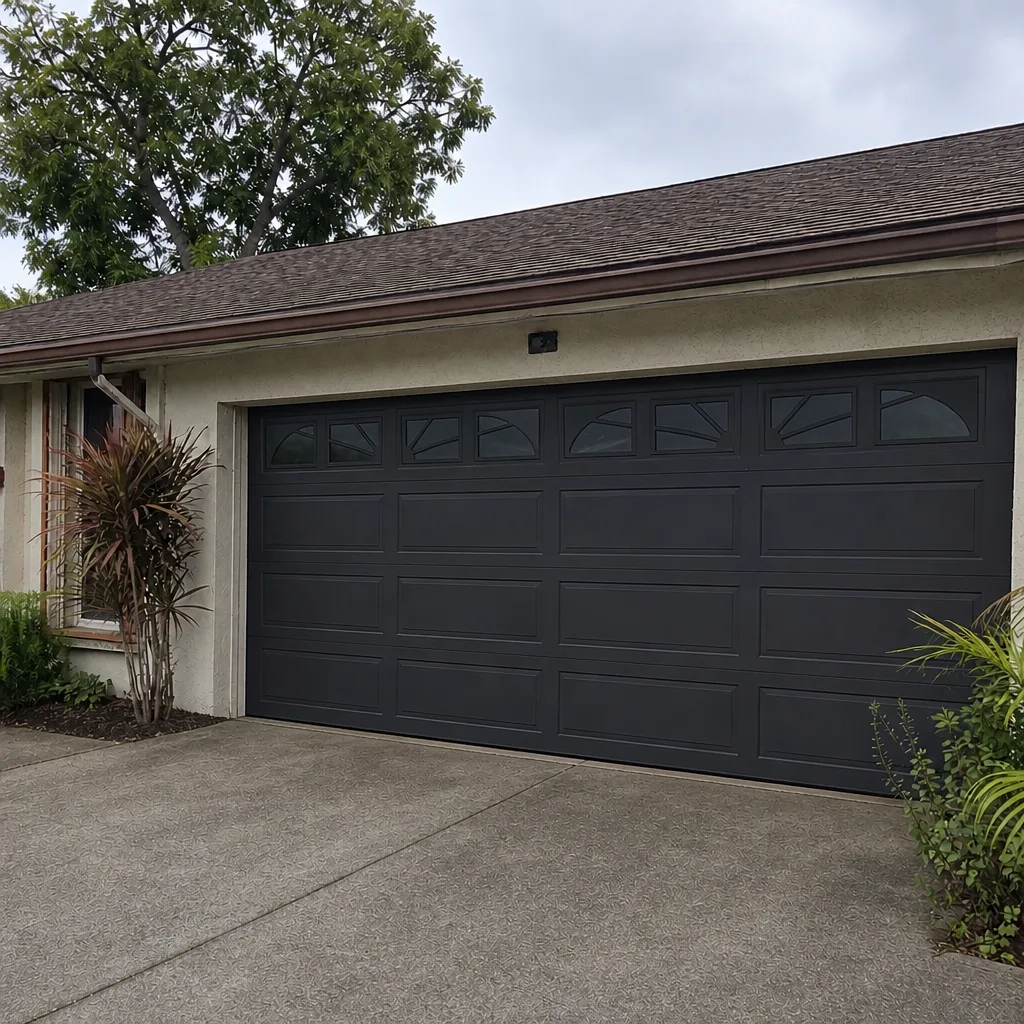 After
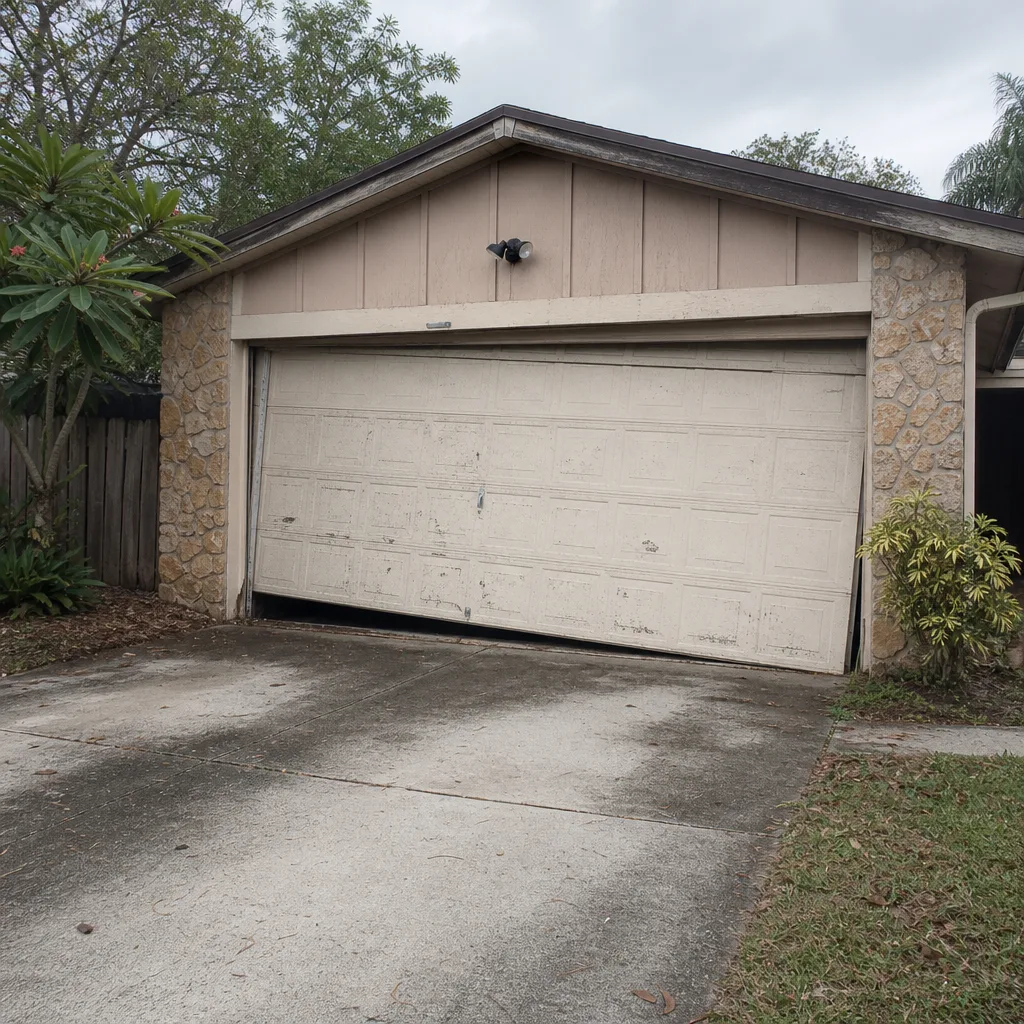 Before
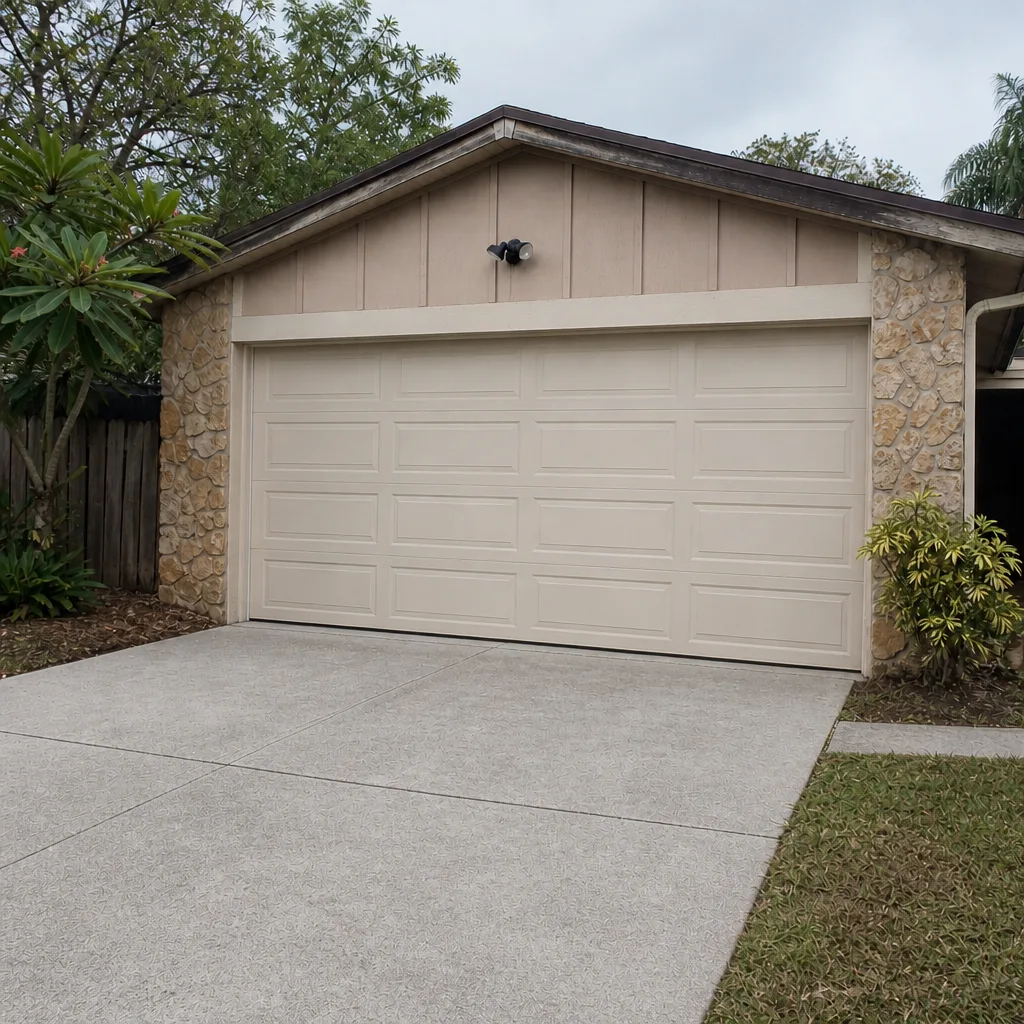 After
Frequently Asked Questions
May, before hurricane season peaks, is the best time because it gives you the most room to fix problems before the heaviest weather arrives. A dry-season follow-up in November or December catches contraction-related issues from the cooler months. Do your own post-storm walkthrough after any named system regardless of when it hits.
Inspections are typically bundled into repair service and quoted before any work starts. We’ll give you a written estimate and confirm the price up front so there are no surprises. Call (866) 406-5925 for an exact quote – estimates are free.
For urgent failures like a broken spring or a door stuck open, emergency service is a core offering, not an afterthought. We handle emergency calls specifically because a stuck door can leave your house exposed. Call (866) 406-5925 and we’ll get you scheduled as fast as we can.
Yes, a quick visual and operational check after any named storm is worth the five minutes. Quiet damage like a knocked track or a hinge with play doesn’t announce itself but weakens the door’s response under load. Catch it early with a walkthrough.
It can stress them over time, corroding contacts and fogging photo-eye lenses, which shows up as intermittent remotes or app dropouts. Basic habits like cleaning lenses and keeping the header dry help. LiftMaster and Chamberlain systems are common in Davie and we’re familiar with both.
Yes. We work on eight major brands, including LiftMaster, Chamberlain, Genie, Clopay, Amarr, Wayne Dalton, Craftsman, and Raynor. If you know your brand, tell us when you call and we’ll come ready for it. Call (866) 406-5925 for a free estimate.
The Bottom Line
Garage door care in Davie comes down to two anchors and a backup: a full inspection in May before storm season peaks, a dry-season lubrication and alignment session, and a deliberate walkthrough after any named storm. Skip the four-season calendar; it doesn’t describe the conditions your door actually faces. The parts that matter most are wind-load hardware, the bottom seal, and the emergency release. If anything looks off, or a spring is involved, hand it to a trained technician. Free estimates are a call away at (866) 406-5925.
Contact Us
If your door has been through a storm, is overdue for its May inspection, or you just want to know where it stands, reach out to Davie Garage Door Repair Co. We handle repair, opener repair, spring repair, and full installation across the brands you actually own. Call (866) 406-5925 for a free estimate, and we’ll quote the price in writing before any work begins.
Written by the team at Davie Garage Door Repair Co.